

Occupancy Misrepresentation: How to Reduce Mortgage Loan Fraud Before Year-End Audits
Occupancy misrepresentation is one of the most common and most overlooked forms of mortgage loan fraud, and it becomes especially costly as year-end audits approach. As those audits near, mortgage lenders face increased scrutiny around loan quality, compliance, and risk exposure. Verifying occupancy is a critical control that can uncover discrepancies before they turn into costly findings. By proactively identifying occupancy misrepresentation, lenders reduce risk, protect portfolios, and mitigate potential mortgage loan fraud.
This guide explains what occupancy misrepresentation is, why it matters during audits, the red flags that signal it, and how lenders can address it before scrutiny intensifies. For the broader year-end picture, see our Audit Readiness Checklist for mortgage lenders.
What Is Occupancy Misrepresentation?
Occupancy misrepresentation happens when a borrower’s stated use of a property does not match how they actually use it.
Occupancy verification confirms whether a borrower is residing in a property as represented during the mortgage application process. It validates owner-occupied, secondary residence, or investment property claims. When those claims do not hold up, the result is occupancy misrepresentation, a leading driver of mortgage loan fraud. For a deeper look at the verification control itself, see our guide on the
Crucial Role of Occupancy Verification.
Why Occupancy Misrepresentation Matters During Audits
Occupancy status directly affects underwriting decisions, loan pricing, and eligibility, which is why auditors scrutinize it closely.
Misrepresentation can trigger compliance concerns, repurchase demands, and increased regulatory scrutiny. According to industry fraud reporting trends, occupancy misrepresentation remains one of the most common forms of mortgage fraud. As a result, even a small share of undiscovered occupancy issues can create significant portfolio risk during year-end reviews.
How Occupancy Misrepresentation Increases Risk
When borrowers falsely claim owner occupancy, lenders absorb several forms of exposure at once.
– Elevated default risk, because investment properties default more often than primary residences
– Repurchase exposure, when investors demand buybacks on misrepresented loans
– Compliance violations, which draw regulatory attention
– Reputational damage, which erodes investor confidence
Investors like Fannie Mae treat occupancy misrepresentation as a serious loan defect, which is what drives repurchase demands.
Consequently, this is not a minor paperwork issue. It is a portfolio-level risk that compounds across every affected loan.
Common Indicators of Occupancy Misrepresentation
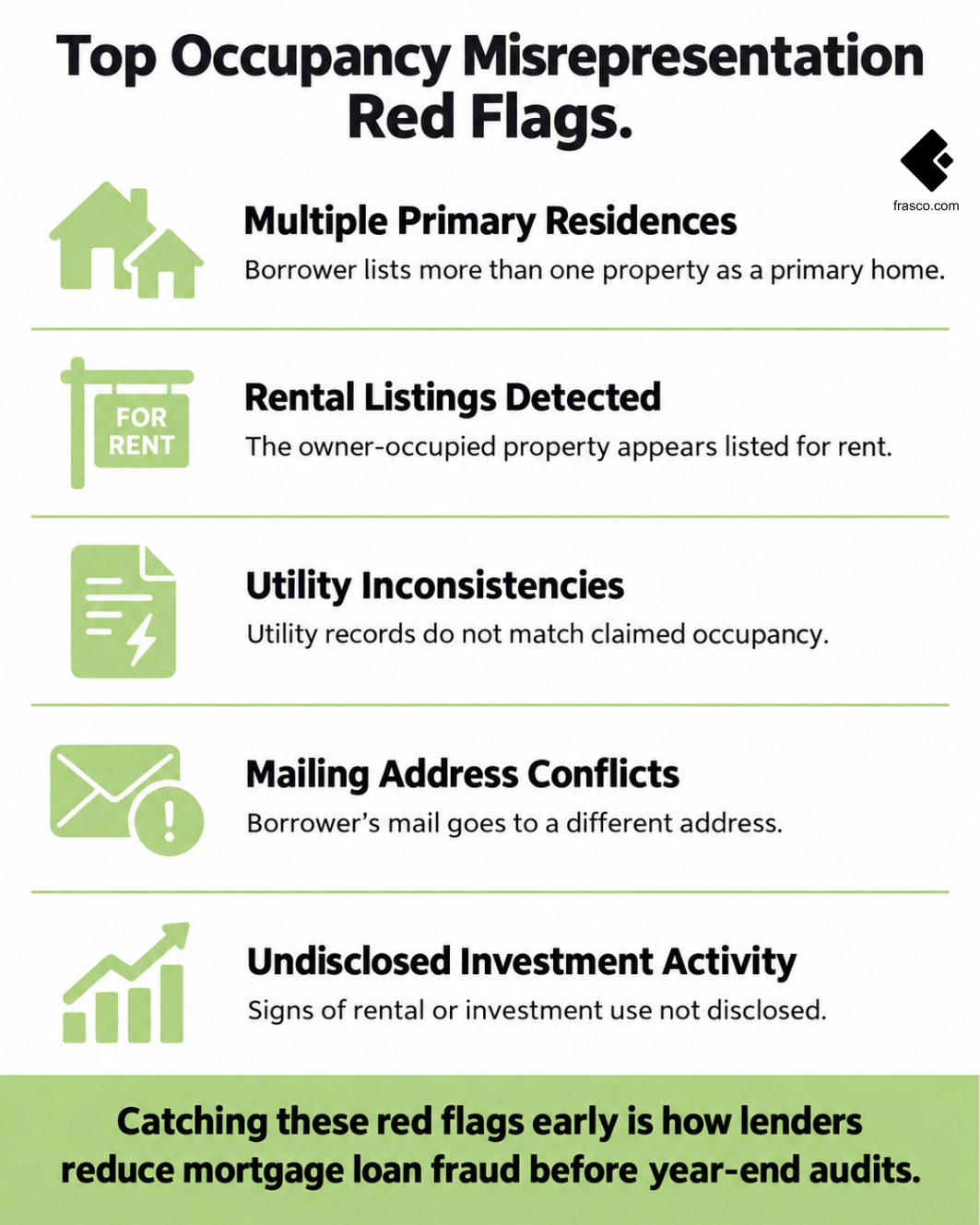
Certain red flags reliably signal possible occupancy misrepresentation and mortgage loan fraud.
Watch for these warning signs:
– Utility records inconsistent with borrower occupancy
– Multiple properties listed as primary residences
– Mismatched mailing addresses
– Rental activity at supposedly owner-occupied properties
For a broader view of how these signals fit into fraud schemes, see our guide on
Combating Occupancy Fraud in the Mortgage Industry.
How Lenders Can Proactively Address the Risk
The best defense against occupancy misrepresentation is a targeted investigation before audit activity intensifies.
Independent occupancy reviews identify discrepancies early, which lets lenders remediate issues before they become larger compliance concerns. Rather than waiting for an auditor to surface a problem, proactive review puts lenders ahead of it. This early, evidence-based approach is the same principle behind strong mortgage fraud detection.
How Frasco Mortgage Risk Mitigation Helps
Frasco Mortgage Risk Mitigation delivers tailored investigative solutions that help lenders catch occupancy misrepresentation early.
Frasco helps lenders verify occupancy claims, identify fraud indicators, and reduce exposure. These customized investigations provide actionable intelligence that supports informed risk management decisions and strengthens audit readiness. In short, the goal is to give lenders the facts they need to act before year-end scrutiny arrives.
Key Takeaway: Address Occupancy Misrepresentation Before Audits
Year-end audits are not the ideal time to discover these discrepancies. By investing in proactive occupancy verification, lenders can uncover potential mortgage loan fraud, improve compliance, and reduce financial exposure before scrutiny increases. Ultimately, a targeted verification strategy today can prevent significant issues tomorrow.
Frequently Asked Questions About Occupancy Misrepresentation
1. What is occupancy misrepresentation?
Occupancy misrepresentation occurs when a borrower states they will use a property as a primary residence but actually uses it as a rental or investment property. Because owner-occupied loans carry better terms, this misrepresentation is a common form of mortgage loan fraud.
2. How do lenders detect occupancy misrepresentation?
Lenders detect it through occupancy verification, checking utility records, mailing addresses, rental listings, and property use against the borrower’s claims. Independent occupancy reviews surface these discrepancies before year-end audits.
3. Why is occupancy misrepresentation a problem during year-end audits?
During audits, occupancy misrepresentation can trigger repurchase demands, compliance findings, and regulatory scrutiny. Even a small number of undiscovered cases can create significant portfolio risk, which is why proactive verification matters.
4. How can lenders reduce occupancy misrepresentation risk?
Lenders reduce risk by conducting targeted occupancy investigations early, before audit activity intensifies. Independent reviews identify discrepancies in time to remediate them, which lowers exposure to mortgage loan fraud and strengthens audit readiness.
Want to Learn More?
At Frasco, we believe knowledge is the foundation of stronger, smarter lending practices. That’s why we provide resources to help lenders deepen their understanding of risk mitigation and compliance.
📄 Download our white paper:
Unlocking Success: 3 Keys for Maximizing Occupancy Verification in Mortgage Lending
Stay Updated: Get real-time insights, the latest blogs, and updates on upcoming industry events.
👉 Follow Frasco on LinkedIn
Contact Us Today
Frasco® Mortgage Risk Mitigation delivers ethical and efficient solutions tailored to your needs. Have questions or want to discuss your investigative needs further? Schedule a call with one of our experts today to find the answers you’re looking for.
If you know a company that could benefit from our investigative services, Submit a Referral Here to help them make informed decisions and prevent costly risks.
Disclaimer: This blog post is for informational purposes only and should not be considered legal advice. Please consult your general counsel for specific legal guidance. Frasco investigators are licensed, and our operations comply with US industry, federal, state, and local laws.