

In U.S. public education, student residency verification directly affects district funding, legal compliance, and the fair distribution of resources. As school districts approach the 2026 spring enrollment and audit cycle, strong verification practices play a critical role in protecting fiscal health and maintaining community trust.
In this post, we explore industry trends, operational challenges, leadership priorities, and best practices for student residency verification, with a focus on strengthening consistency and fairness through objective third-party verification support.
Industry Trends Shaping Student Residency Verification in Early 2026
Seasonal Patterns
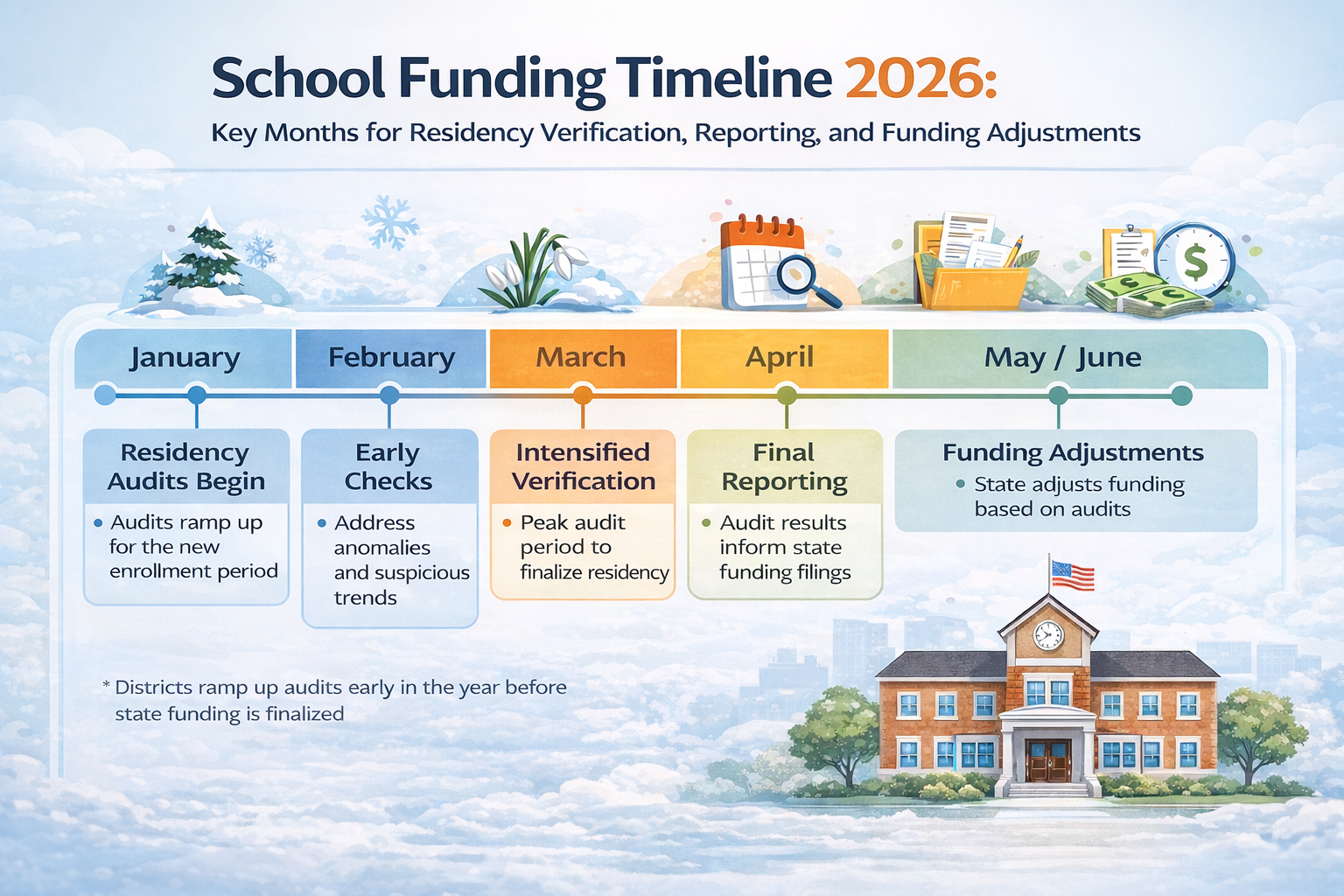
School districts increase student residency verification efforts from January through April as part of the annual enrollment review process. This period aligns with state funding deadlines and supports planning for the upcoming school year.
During this time, districts reassess residency documentation collected at enrollment and throughout the academic year to confirm accuracy before final reporting.
Data and Technology Trends
Manual residency checks, including document reviews and home visits, no longer meet the demands of today’s housing market. Advanced document manipulation and frequent address changes require districts to adopt stronger verification tools.
As a result, many districts now rely on public records and analytics that cross-check addresses with property and vehicle data to flag inconsistencies more efficiently. (Source: Thomson Reuters Legal)
Anticipated District Trends
In 2026, school districts are expected to:
-
Increase reliance on data‑driven verification and objective evidence gathering. Manual processes are costly and often inaccurate, draining time and budgets. (Source: CivicBell)
-
Face continued scrutiny from state education agencies demanding stronger compliance and defensible evidence in audits.
-
Apply more consistent and fair investigative standards to reduce stress on eligible families
Why Student Residency Verification Matters for District Budgets and Equity
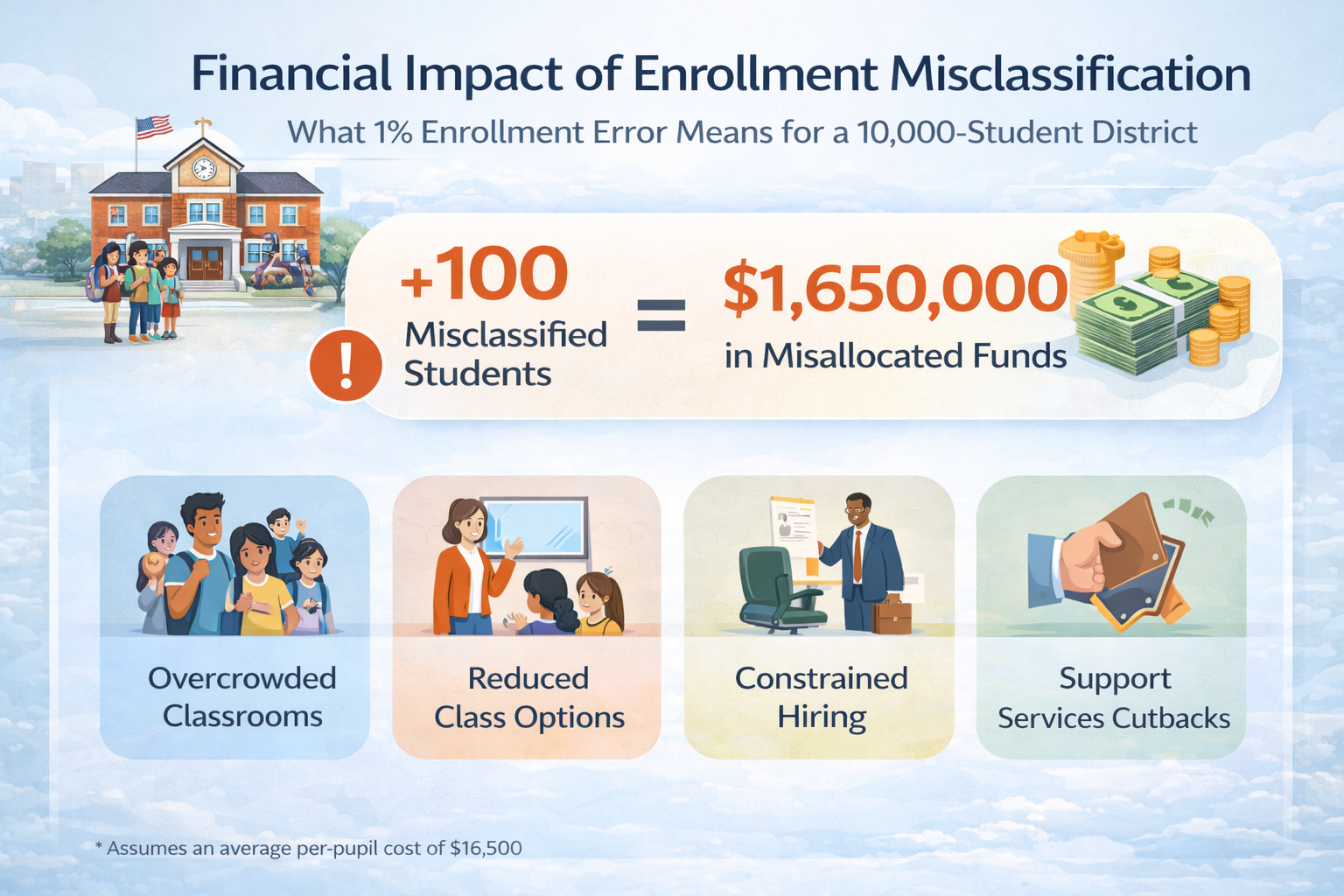
Public education funding depends heavily on accurate enrollment counts. The average annual cost per student exceeds $16,500, meaning even a small number of incorrect enrollments can create a meaningful financial impact at the district level. (Source: CivicBell)
Budget Impact on District Operations
When districts misclassify student residency, they risk diverting resources away from resident students. This can affect classroom size, staffing, and student support services.
Compliance and Fairness
Accurate student residency verification supports both legal compliance and equity. Districts must follow state laws while ensuring fair treatment of families who legitimately qualify for enrollment.
Common Pain Points for District Leaders and Administrators
District administrators and superintendents consistently face the following challenges:
1. Unreliable or Altered Documentation
Leases, utility bills, and driver’s license are easy to alter, which makes verification difficult without investigative support. (Source: CivicBell)
2. Heavy Administrative Burden
Staff often spend hundreds of hours cross-checking records, delaying enrollment decisions and pulling focus away from educational priorities. (Source: CivicBell)
3. Equity and Community Trust Concerns
Inconsistent verification practices can unfairly impact some families while allowing others to avoid review, which weakens trust.
4. Audit and Legal Risks
State education agencies expect clear, defensible proof. Weak student residency verification controls can trigger corrective action during audits. Recent investigations have demonstrated that insufficient proof can lead to a large number of non‑resident determinations. (Source: OSSE)
What District Leaders Are Motivated To Achieve
District leaders prioritize:
-
Fiscal accountability by protecting taxpayer funding
-
Operational efficiency to reduce staff workload
-
Equitable enrollment practices applied consistently
-
Audit-ready documentation that stands up to review
These goals reinforce the value of objective, third-party investigative support that strengthens internal student residency verification processes.
Best Practices for Student Residency Verification in 2026
1. Implement Cross‑Source Data Verification
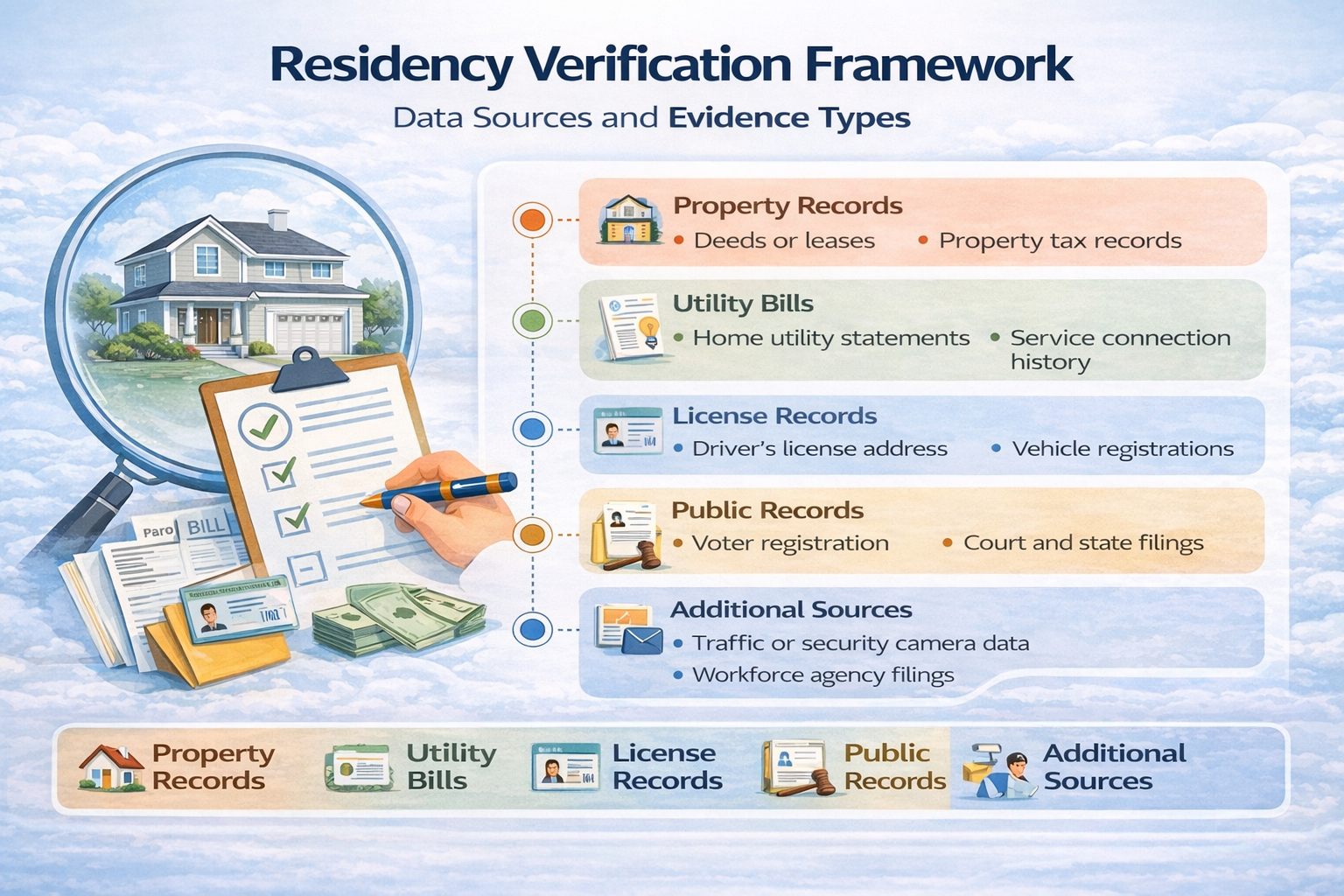
Districts should validate addresses using property records, vehicle registrations, and public databases early in the enrollment process.
2. Standardize Documentation Requirements
Clear and consistent documentation standards reduce confusion and improve fairness across schools.
3. Apply Objective Investigative Support When Needed
When automated checks fail to resolve questions, trained investigators can gather field evidence and conduct structured interviews. This approach preserves fairness while resolving unclear cases efficiently.
Integrating Third-Party Support into Student Residency Verification
Third-party verification adds independence and structure to student residency verification efforts by:
-
Reducing bias in investigations
-
Providing audit-ready evidence packages
-
Supporting policy updates through investigative insight
This approach strengthens consistency and fairness across all residency evaluations.
Conclusion: Preparing for Spring 2026 Enrollment Reviews
As districts enter the critical period of enrollment audits and funding confirmation, strengthening student residency verification practices supports both financial responsibility and community trust.
By applying consistent processes and objective verification methods, districts can allocate resources fairly and remain prepared for audit review throughout 2026 and beyond.
Want to Learn More?
See how school districts use investigations to protect resources and keep enrollment fair.
📄 Download our white paper: Protecting Educational Resources: 4 Ways to Address Residency Fraud
Stay Updated: Get our latest posts, school-district fraud trends, and upcoming events—right in your feed 👉 Follow Frasco on LinkedIn
Contact Us Today
Frasco® District Residency Investigations delivers ethical and efficient solutions tailored to your needs. Have questions or want to discuss your investigative needs further? Schedule a call with one of our experts today to find the answers you’re looking for.
If you know a school district that could benefit from our investigative services, Submit a Referral Here to help them protect their resources and strengthen community trust.
Disclaimer: This blog post is for informational purposes only and should not be considered legal advice. Please consult your general counsel for specific legal guidance. Frasco investigators are licensed, and our operations comply with US industry, federal, state, and local laws.