

A school residency investigation is far easier to complete during the quiet summer months than in the middle of a busy academic term. School districts across the United States face increasing pressure to manage fluctuating enrollment, maintain accurate student records, and apply residency policies consistently and fairly. As June 2026 approaches, national data shows ongoing declines in public school enrollment along with increased movement between districts and schooling options. K12 Dive reports that districts nationwide are grappling with both enrollment volatility and challenges verifying student residency, influenced in part by population shifts and increased family mobility. (Source: k12dive.com)
This broader context makes the quieter summer period a valuable opportunity. With fewer active instruction days and reduced day-to-day operational demands, district administrators can strategically use June and July to resolve outstanding school residency investigation cases, clean up incomplete documentation, and ensure compliance ahead of fall enrollment. This guide outlines the key trends, responsibilities, and practical steps district leaders can take to strengthen their residency management processes before the next academic year begins.
Why Summer Matters for School Residency Investigation Case Resolution
The slower summer pace gives district teams the focused time that a thorough school residency investigation requires but rarely gets during the school year.
Reduced Time Pressure
During the school year, front office teams, registrars, and administrators handle constant demands ranging from enrollment inquiries to attendance reviews. Summer slows this pace. Fewer walk-ins and fewer active family requests free staff to focus on school residency investigation backlog cleanup without student traffic interrupting their work every few minutes.
Increased Enrollment Volatility
National data highlights a continued decline in public school enrollment through 2026. K12 Dive has reported districts anticipating significant staffing changes due to lower projected student counts. Chalkbeat has noted similar trends, with major districts seeing enrollment drops tied to demographic shifts and the growth of alternative schooling options. (Source: chalkbeat.org)
This volatility makes each school residency investigation even more important. Accurate residency data helps districts:
- Project staffing needs with confidence
- Allocate funding appropriately across campuses
- Maintain compliance with state regulations
- Prevent avoidable enrollment fluctuations in August and September
Preparation for Fall Audits and Reporting Cycles
Many states require districts to certify residency records, enrollment counts, and verification documentation early in the school year. Consequently, completing each school residency investigation in June means there are fewer incomplete or questionable records when compliance deadlines arrive.
Summer 2026 Trend Insight: Enrollment Decline and Increased District Mobility
Enrollment decline and family mobility are directly increasing the volume of school residency investigation cases that districts must resolve before fall.
Throughout 2025 and into 2026, multiple education news outlets have documented a rise in school closures, consolidations, and reconfigured attendance boundaries due to enrollment decline. K12 Dive’s reporting tracks districts nationwide considering or implementing closures as part of long-term strategic planning. (Source: k12dive.com)
These changes produce predictable ripple effects that drive school residency investigation volume higher:
- Families move between campuses during boundary shifts
- Parents explore transfers into preferred districts
- Temporary living situations rise as families adjust to economic conditions
- Incorrect or incomplete residency documentation increases across the district
For district residency teams, June is the best month to get ahead of these patterns before August enrollment surges begin.
A Six-Step School Residency Investigation Cleanup Checklist for Summer
Use this practical checklist to resolve every open school residency investigation before fall enrollment begins. It aligns with the best practices used by professional district residency investigators.
1. Identify and Categorize All Open Cases
Begin by generating a list of all unresolved or flagged residency records, then categorize each one by type:
- Missing documentation
- Expired affidavits
- Incomplete proof of residence
- Conflicting addresses between systems
- History of previous violations
- Reports from school staff or community members
A clear categorization system helps prioritize the school residency investigation cases that require immediate action.
2. Cross-Check Residency Data With Other Internal Records
Cross-referencing quickly reveals discrepancies. Teams should compare enrollment records, attendance data, transportation routing information, and prior residency investigations. Furthermore summer is the ideal time to ensure the student information system matches state reporting systems, which reduces errors at audit time.
3. Reach Out to Families With Pending or Incomplete Records
Documenting every outreach attempt is critical to a defensible school residency investigation. Staff should use email reminders, mailed letters, calls to primary and secondary contacts, and requests for updated documentation when older records are no longer valid. Clear communication helps families understand deadlines and prevents misunderstandings later in August.
4. Determine Which Cases Require Field Verification
Some residency doubts cannot be resolved with paperwork alone. Districts may choose to escalate a school residency investigation for third-party verification, which can include interviews, property checks, or surveillance performed by professional residency investigators. Notably, summer verifications tend to be more accurate because household routines are stable and easier to observe.
5. Update Affidavit Processes
Many districts rely on affidavits for families in nontraditional housing situations. Summer is the right time to review affidavit expiration dates, require resubmission of outdated forms, verify homeowner signatures, and check for repeat affidavit use by the same families. These steps strengthen both the accuracy and compliance of every school residency investigation.
6. Prepare Data for Annual Reporting
Cleaning up records in June ensures reporting teams have accurate student addresses and verified residency information before fall submissions. As a result the district enters the new year with clean and defensible records.

How Districts Benefit From Proactive Summer School Residency Investigation Work
Resolving school residency investigation cases early delivers five measurable benefits that protect district funding, compliance, staff, and families.
1. Reduced Enrollment Surprises
Administrators often face unexpected increases or drops in student numbers in late August. By resolving questionable school residency investigation cases earlier, districts can make more accurate staffing and budgeting decisions before the year begins.
2. Improved Funding Accuracy
Enrollment-based funding formulas rely on accurate residency data. A district that fails to maintain clean records risks misreporting and potential financial corrections later. Therefore each completed school residency investigation directly protects the accuracy of the district’s funding.
3. Stronger Compliance and Audit Readiness
State agencies expect districts to maintain complete documentation that supports every enrollment decision. Summer school residency investigation cleanup ensures that documentation is organized, accurate, and available if the district is audited.
4. Better Support for Vulnerable Families
Students experiencing homelessness or housing transitions deserve clear guidance. When districts proactively review records, they can identify families who may qualify for support under the McKinney-Vento Act and connect them with resources more quickly. In this way a school residency investigation protects vulnerable students rather than penalizing them.
5. Reduced Staff Stress During Peak Enrollment Months
August is typically the most chaotic time of year for enrollment offices. By resolving school residency investigation cases early, staff can focus on serving new families instead of revisiting old cases during the busiest weeks of the year.
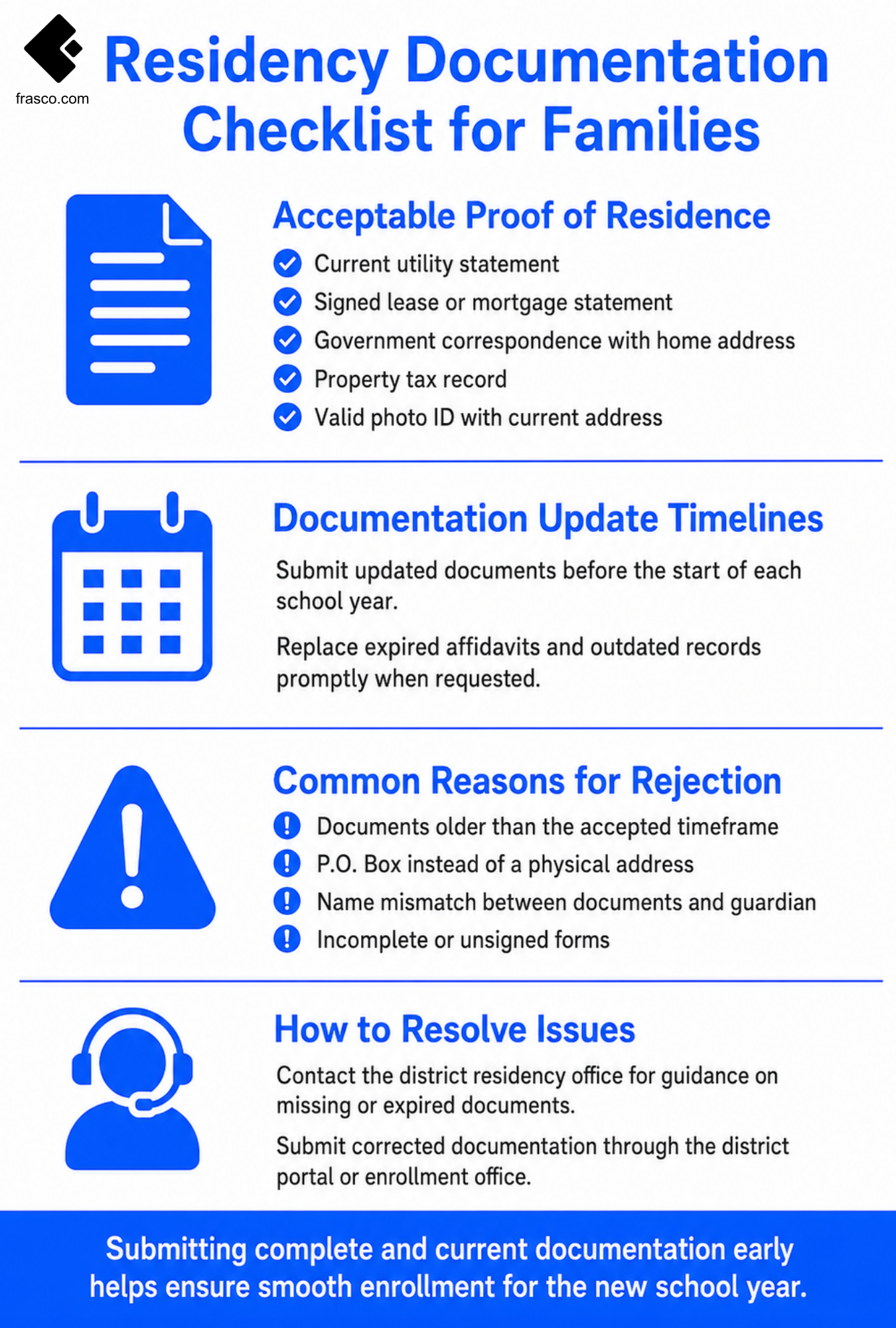
Enter the New School Year With Clean and Defensible Residency Records
As districts continue navigating ongoing enrollment declines, shifting demographics, and increasing mobility, proactive school residency investigation cleanup becomes an essential summertime task. June and July provide the quiet that administrators need to focus on incomplete records, documentation inconsistencies, and unresolved cases.
Leveraging checklists, guided workflows, and clear visual tools helps residency and enrollment teams prepare for the upcoming school year with accuracy, efficiency, and confidence. Districts that invest in a strong summer school residency investigation process will enter August knowing their records are clean, compliant, and ready for the new school year.
Want to Learn More?
See how school districts use investigations to protect resources and keep enrollment fair.
📄 Download our white paper: Protecting Educational Resources: 4 Ways to Address Residency Fraud
Stay Updated: Get our latest posts, school-district fraud trends, and upcoming events—right in your feed 👉 Follow Frasco on LinkedIn
Contact Us Today
Frasco® District Residency Investigations delivers ethical and efficient solutions tailored to your needs. Have questions or want to discuss your investigative needs further? Schedule a call with one of our experts today to find the answers you’re looking for.
If you know a school district that could benefit from our investigative services, Submit a Referral Here to help them protect their resources and strengthen community trust.
Disclaimer: This blog post is for informational purposes only and should not be considered legal advice. Please consult your general counsel for specific legal guidance. Frasco investigators are licensed, and our operations comply with US industry, federal, state, and local laws.