

Proactive residency reviews are one of the most effective strategies school districts can use. They reduce administrative stress and help districts enter fall with confidence.
As school districts approach the summer 2026 registration season, administrators face familiar pressures. These include enrollment shifts, staffing concerns, capacity limits, and growing family expectations for clear and timely communication.
Rising demand for efficient residency reviews continues to shape how smoothly schools transition into fall. K12 Dive reports that districts nationwide face declining enrollment and shifting demographics. Some project staffing reductions of 500 to 700 teachers by the 2026 to 2027 school year due to enrollment instability. Other districts have experienced nearly 17 percent enrollment declines over the last decade. This forces difficult decisions about school closures and resource changes. (Source: k12dive.com)
These shifting patterns place residency reviews at the center of district readiness. Districts must know how many students to expect, where they live, and which campuses they attend. This post outlines practical steps superintendents, registrars, and school business officials can take now. The goal is to get ahead of summer registrations and reduce back-to-school stress through proactive residency reviews.
Why Proactive Residency Reviews Matter More Than Ever for Districts in 2026
Three trends are making structured residency reviews a strategic priority heading into summer 2026. They are no longer a routine administrative task.
1. Enrollment Trends Are More Unpredictable Than Before
School districts across the United States continue to experience enrollment shifts. These are driven by demographic changes, housing pattern changes, and growth in private and homeschool options. Chalkbeat reports that some districts have seen enrollment decreases of more than nine percent over the past decade.
This outpaces statewide trends and reshapes school planning needs. Consequently this makes staffing, transportation routing, and classroom planning harder. Districts need reliable data from completed residency reviews before summer registration opens. (Source: chalkbeat.org)
2. Federal Priorities Are Shifting Toward Efficient Resource Allocation
The 2026 K-12 outlook confirms that districts face growing pressure to make the most of limited resources. They must also meet new federal expectations for efficiency and fair student support. Structured residency reviews strengthen district decision-making. They ensure resources go to the right student groups and campuses before staffing and transportation plans are locked in.
3. Families Expect Faster and Clearer Enrollment Processes
Many districts have expanded online enrollment portals over the past several years. While digital tools improve convenience they also raise expectations for real-time responses. Without proactive residency reviews in place, backlogs grow quickly during peak registration periods. This places stress on both families and staff at the exact moment when clarity matters most.
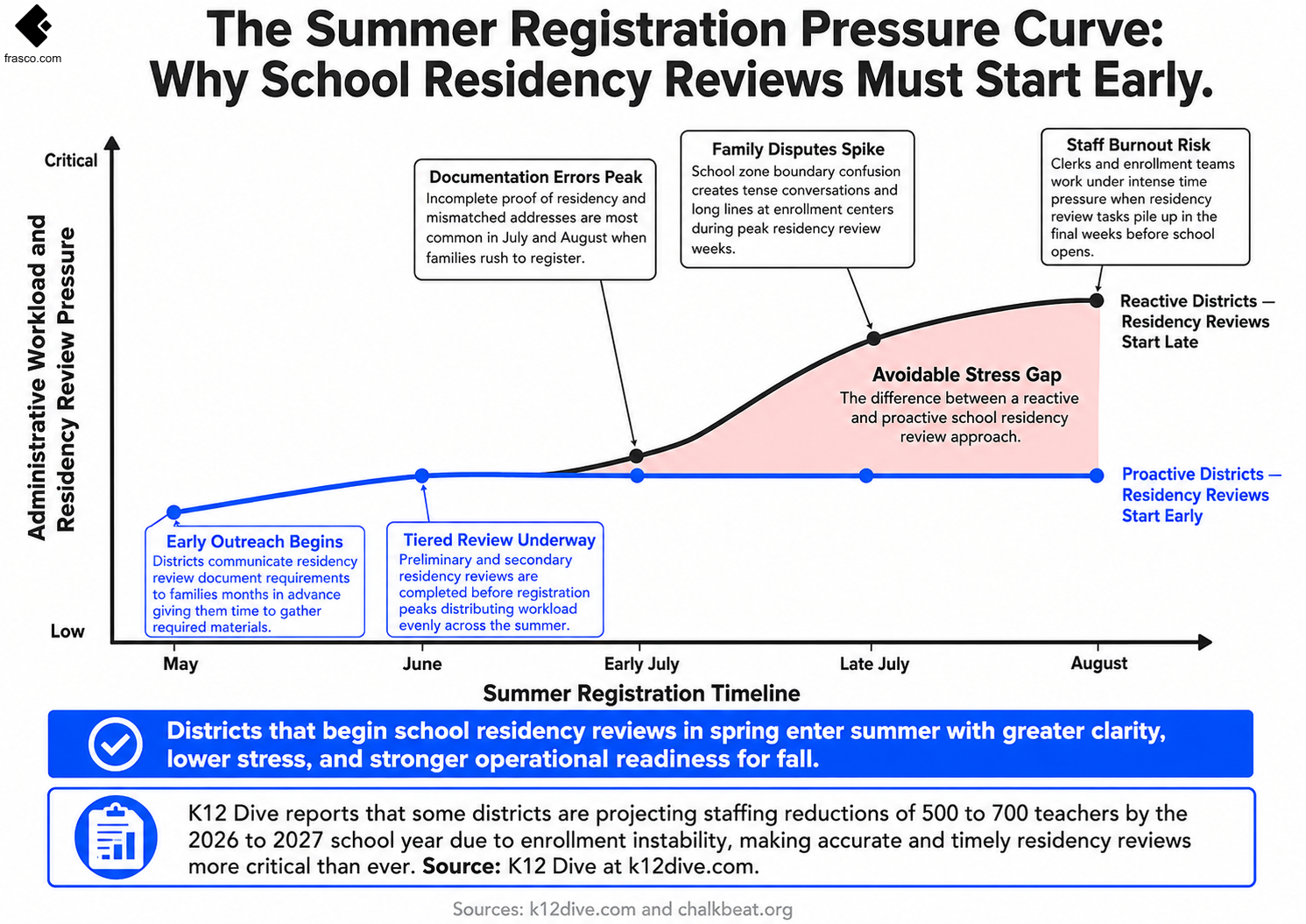
How Early Residency Reviews Improve District Operational Readiness
Starting residency reviews early delivers three clear benefits. Each one protects district resources, staff wellbeing, and family experience before fall arrives.
1. More Accurate Enrollment Forecasting
Residency reviews conducted in spring or early summer provide earlier insight into expected student counts. This improves planning accuracy across four key areas:
- Teacher assignments — Confirmed enrollment counts allow principals and HR teams to finalize staffing before the school year begins rather than after registration closes.
- Class size projections — Accurate residency data from completed reviews reduces the risk of over or under-enrolling classrooms that require costly mid-year corrections.
- Special program allocation — Verified student locations ensure that specialized services and programs are staffed and resourced for the right campuses before the year begins.
- Transportation routes — Confirmed home addresses from residency reviews allow transportation teams to finalize bus routes before the first day of school rather than scrambling in August.
Education Week notes that districts increasingly rely on accurate student location and demographic data. This data guides decisions across operations and instruction. Proactive residency reviews strengthen it before key decisions are made. (Source: edweek.org)
2. Reduced Administrative Stress During Peak Registration Months
When residency reviews pile up in late summer, enrollment teams work under intense time pressure. This leads to errors, staff burnout, and poor family experiences. Early reviews dramatically reduce:
- Last-minute document submissions that arrive incomplete or outdated
- Family disputes about school zone boundaries that consume valuable staff time during the busiest registration weeks
- Delays caused by incomplete household information that requires follow-up communication
- Overflow lines at in-person enrollment centers that frustrate families and create reputational concerns for the district
A smoother workflow not only protects staff wellbeing. It also creates a more positive and organized experience for every family entering the registration process.
3. Stronger Compliance and Equity Across Campuses
Accurate information from completed residency reviews protects school boundary integrity. It ensures that seats, staffing, and funding go to the right students according to district policy. For districts managing enrollment declines or consolidations, this accuracy becomes even more important. In addition, some states have reported entire groups of students unaccounted for during enrollment shifts. This makes a clear understanding of actual residency essential for planning, equity, and budget protection. (Source: k12dive.com)
A Six-Step Checklist for Conducting Proactive Residency Reviews Before Summer Registration
Use this checklist to enter the 2026 summer registration season prepared. Your district will have strong residency review processes, ready families, and trained staff.
Step 1 — Begin Family Outreach in Early Spring
Send clear communication to all current and incoming families explaining what your residency reviews require:
- Which documents are needed and why residency verification supports fair school placement
- Where and when families should submit their documents for review
- How early submission avoids delays and long lines during peak registration weeks
- What happens after documents are submitted and how families can check their review status
Giving families clear expectations months in advance allows them to prepare without the stress of a late-summer deadline.
Step 2 — Build a Tiered Residency Review Process
Create internal procedures that include three distinct review stages:
- Preliminary review of documentation before registration opens to catch obvious gaps or problems early
- Secondary review for exceptions or complex cases that need more investigation before a decision is reached
- Final confirmation before student schedules and transportation routes are set. This ensures every placement rests on a completed and verified residency review.
This tiered approach keeps high-priority cases from causing delays that affect the broader registration workflow.
Step 3 — Train Staff on Updated Residency Review Policies
Residency rules often change due to boundary updates, legislative changes, or shifts in district planning. Annual staff training ensures that every enrollment team member understands:
- Which documents are acceptable for residency reviews and which are not
- How to identify inconsistencies between submitted documents and other available information
- When to escalate concerns for further review or third-party investigative support
Consistent training leads to fair and solid enforcement of residency review policy across all campuses.
Step 4 — Use Third-Party Expertise for Complex Residency Review Cases
Districts with limited staffing or those facing significant enrollment shifts often need external support for investigative residency reviews. Specifically, using qualified residency investigation providers helps districts confirm household eligibility in more complex cases. This also reduces the workload on internal enrollment teams. In-house staff can then focus on routine document processing and family communication rather than complex investigative cases.
Step 5 — Provide Clear Submission Channels for Residency Review Documents
Offering both digital and in-person document submission options increases family access. It also reduces the chance of incomplete residency review files reaching enrollment teams. Ensure families know:
- Where to upload digital documents and how to confirm their submission was received
- How to check their residency review status and what to expect next
- Who to contact with questions about their specific situation or required documentation
When families understand the residency review process clearly they are far less likely to encounter delays in July or August.
Step 6 — Update Boundary Maps and District Websites Before May
Outdated boundary information is a leading cause of family confusion during registration. It is also one of the most avoidable residency review problems. Make sure all digital maps, enrollment zone directories, and school assignment tools reflect current data before spring outreach begins. Accurate boundary information on the district website also reduces misdirected applications that need manual correction during peak review weeks.
Why Districts That Front-Load Residency Reviews Enter Fall With a Strategic Advantage
Districts that conduct residency reviews early will enter the 2026 fall semester with greater clarity and lower stress. They will also have stronger readiness across every area of school planning
By starting residency reviews earlier, districts reduce uncertainty caused by demographic shifts, enrollment declines, and changing federal priorities. A proactive review model helps districts achieve five specific outcomes:
- Protect instructional and operational resources by ensuring staffing, programs, and transportation are built around verified student counts from completed reviews
- Reduce administrative pressure during peak months by spreading the residency review workload across spring and early summer
- Improve the accuracy of student forecasting that drives budget decisions, staffing plans, and facility use across the district
- Create a more predictable and positive experience for families who have clear instructions and adequate time to prepare their residency review documentation
- Strengthen equity and compliance across campuses by ensuring every enrollment decision comes from a verified and documented residency review outcome
As the 2026 school year approaches, proactive residency reviews are not simply an administrative task. They are a strategic investment in accuracy, equity, and stability. Every superintendent, registrar, and school business official is responsible for protecting these outcomes.
Want to Learn More?
See how school districts use investigations to protect resources and keep enrollment fair.
📄 Download our white paper: Protecting Educational Resources: 4 Ways to Address Residency Fraud
Stay Updated: Get our latest posts, school-district fraud trends, and upcoming events—right in your feed 👉 Follow Frasco on LinkedIn
Contact Us Today
Frasco® District Residency Investigations delivers ethical and efficient solutions tailored to your needs. Have questions or want to discuss your investigative needs further? Schedule a call with one of our experts today to find the answers you’re looking for.
If you know a school district that could benefit from our investigative services, Submit a Referral Here to help them protect their resources and strengthen community trust.
Disclaimer: This blog post is for informational purposes only and should not be considered legal advice. Please consult your general counsel for specific legal guidance. Frasco investigators are licensed, and our operations comply with US industry, federal, state, and local laws.