
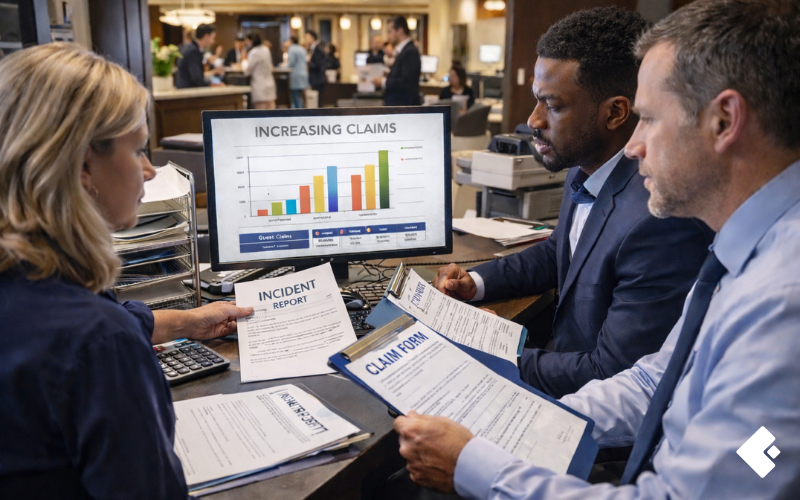
As hospitality organizations enter 2026, leaders responsible for hospitality risk management face familiar pressures with renewed urgency. Guest volumes shift, staffing levels change, and insurance scrutiny increases. February is a pivotal moment. It sits between peak holiday travel and spring demand while also aligning with policy reviews, budget resets, and operational planning cycles.
For this reason, early year decisions carry long term consequences. This guide examines the most persistent risk trends in hospitality, explains why they intensify early in the year, and outlines practical steps leaders can take to protect guests, employees, and financial performance throughout 2026.
Why February Is a Strategic Window for Hospitality Risk Management
February often reveals where controls weakened during peak season. Temporary staff onboarding, deferred maintenance, and increased winter related incidents all contribute to higher exposure.
At the same time, insurers and internal stakeholders expect risk teams to present clear documentation, loss trend analysis, and improvement plans early in the year. Organizations that address gaps now position themselves for better cost control, stronger claims outcomes, and more defensible decisions throughout the year.
Key Industry Trend 1: Workplace Injuries Continue to Drive Claims Costs
Hospitality remains one of the most injury prone service sectors in the United States, making workplace safety a core pillar of hospitality risk management.
-
Hospitality workers experience injury rates significantly higher than many other industries. Some analyses show they are roughly 40 percent more likely to be injured than the average U.S. worker. (Source: samandashlaw.com)
-
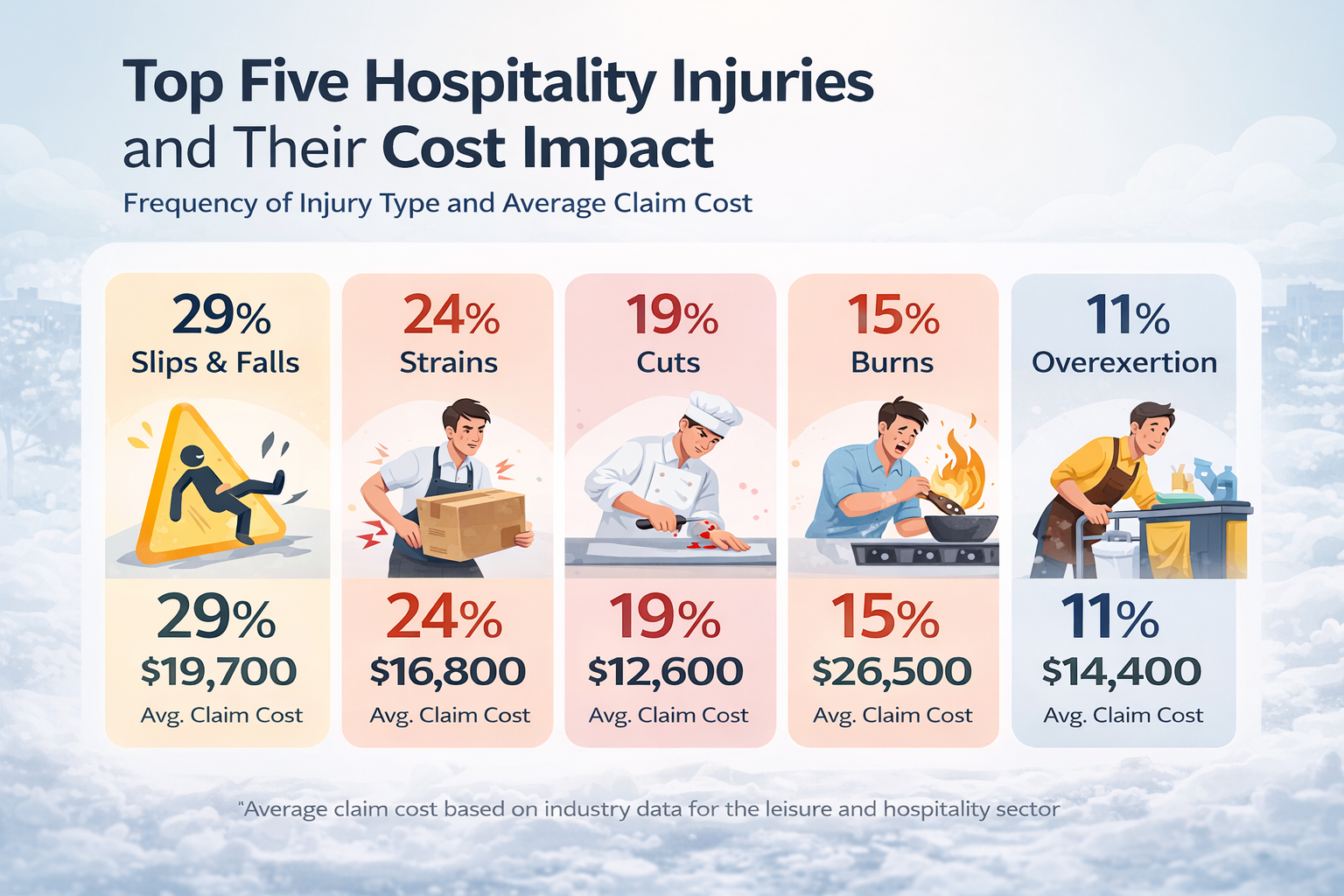
Slips, trips, and falls account for nearly 30 percent of hospitality workplace injuries, making them the most common and preventable incident type. (Source: bergermichelena.com)
-
In recent reporting years, nonfatal workplace injuries in leisure and hospitality generated more than $3 billion annually in direct costs. (Source: Liberty Mutual Workplace Safety Index)
These incidents affect more than workers compensation. They influence insurance premiums, litigation exposure, staffing stability, and brand reputation.
Why Injury Trend Peaks Early in the Year
Several seasonal factors drive early year injury risk:
-
Winter conditions increase fall hazards in entryways, kitchens, and loading zones
-
New or seasonal employees may lack full safety training
-
Deferred maintenance issues surface after peak holiday operations
As a result, February becomes a critical checkpoint for hospitality risk management teams to address safety gaps before losses escalate.
Key Industry Trend 2: Guest Incident Claims Remain High Exposure Events
Guest injuries remain a major liability concern and represent a significant component of hospitality risk management oversight. Slip and fall incidents, physical altercations, and service related injuries often turn into claims based on response quality rather than the incident alone.
Poor documentation increases the likelihood of settlements instead of defensible outcomes.
Common Documentation Gaps
-
Incomplete witness statements
-
Delayed scene documentation
-
Inconsistent reporting across properties
For multi location operators, inconsistent documentation increases exposure and limits the effectiveness of hospitality risk management controls.
Key Industry Trend 3: Insurance Cost Pressure and the Role of Hospitality Risk Management
Insurance remains one of the most closely monitored cost centers in hospitality, and insurers now evaluate hospitality risk management maturity more closely during renewals.
-
Hotel insurance costs now average approximately 1.7 percent of total revenue.
(Source: oysterlink.com) -
Insurers increasingly emphasize loss history, investigation quality, and proactive controls during renewals. (Source: hotelmanagement.net)
Organizations that document investigative rigor and demonstrate trend driven risk improvement gain stronger positioning during renewal discussions.
Your February Risk Readiness Checklist for Hospitality Operations
1. Review Incident Patterns from the Past 12 Months
Analyze prior year incidents to identify repeat locations, times of day, and operational triggers. This review helps hospitality risk management teams pinpoint preventable risks.
2. Evaluate Investigation Consistency Across Properties
Confirm that incident reports, witness interviews, and scene documentation follow a standardized process across all locations. Consistency strengthens defensibility and improves claim outcomes.
3. Strengthen Front-Line Response Protocols
Early response quality directly affects liability and claim resolution. Clear guidance reduces confusion during high-stress events and improves documentation accuracy.
4. Align Risk, Claims, and Operations Teams
Cross-functional collaboration reduces blind spots and ensures corrective actions move beyond documentation into daily operations.
How Investigative Support Strengthens Hospitality Risk Management Programs
For large hospitality organizations, internal teams often stretch thin during peak incident periods. External investigative support provides measurable value through:
-
Objective, third-party documentation
-
Scalable coverage across multiple properties
-
Consistent investigative standards
-
Clear, defensible reporting aligned with insurer and legal expectations
When investigations follow a structured and timely process, hospitality risk management programs gain clarity, reduce unnecessary payouts, and strengthen long term risk control.
Conclusion: Preparing Now for Safer Stays Throughout 2026
New-year safer stays begin with preparation, not reaction. February offers hospitality risk leaders a critical opportunity to assess exposure, reinforce investigative discipline, and establish a strong foundation for defensible outcomes in 2026.
By addressing workplace injury trends, guest incident risk, and insurance expectations early, hospitality risk management teams protect employees, safeguard guests, and support defensible outcomes throughout 2026.
Want to Learn More?
At Frasco, we believe knowledge plays a critical role in hospitality risk management. We provide resources designed to help risk professionals navigate claims, investigations, and evolving exposure with confidence.
📄 Download our white paper: Service with a Smile: Navigating Fraud in Hospitality’s Top 3 Claims
Stay Updated: Get real-time insights, the latest blogs, and updates on upcoming industry events.
👉 Follow Frasco on LinkedIn
Contact Us Today
Frasco® Investigative Services delivers ethical and efficient solutions tailored to your needs. Have questions or want to discuss your investigative needs further? Contact one of our experienced experts today to find the answers you’re looking for.
Disclaimer: This blog post is for informational purposes only and should not be considered legal advice. Please consult your general counsel for specific legal guidance. Frasco investigators are licensed, and our operations comply with US industry, federal, state, and local laws.