
Claims Risk Management for Summer 2026: How Insurers Can Get Ahead of Seasonal Claim Spikes With Strong Investigations and Risk Controls
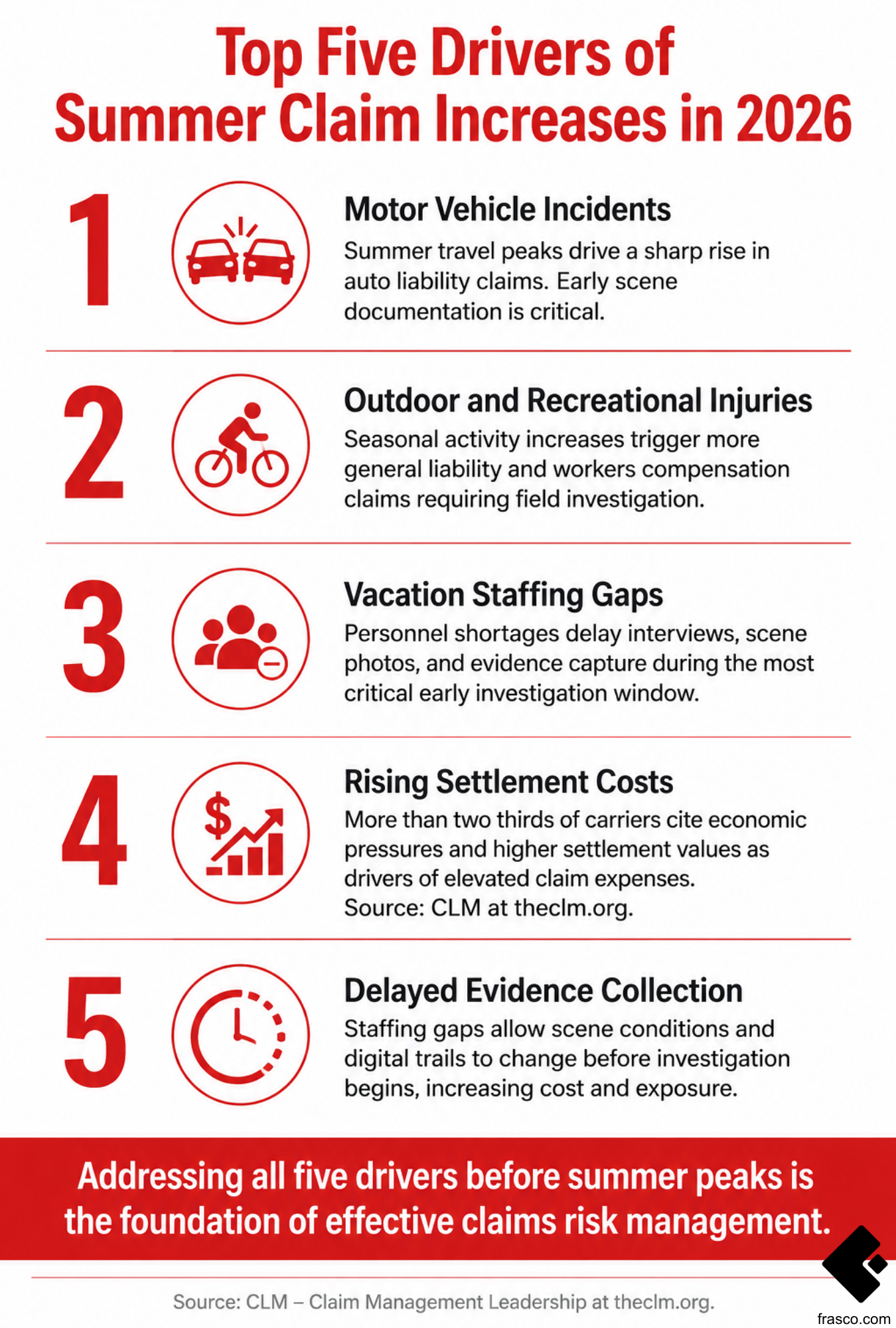
Strong claims risk management is what separates insurers that control the summer surge from those that are overwhelmed by it. Every summer, claim frequency rises across multiple lines, creating operational strain for claims organizations and exposing gaps in investigative readiness. Seasonal shifts in claimant behavior, increased travel, outdoor activities, and workforce vacation schedules all drive risk higher. Industry publications consistently confirm that summer months bring a measurable surge in claims, often tied to avoidable incidents and increased recreational exposure. Motor vehicle incidents and personal injuries rise significantly during the mid-year period.
For insurers preparing for the 2026 summer season, rising claims costs and economic pressures add another layer of complexity. A recent report notes that more than two thirds of organizations cite economic factors and market pressures, including higher settlement costs and increases in reinsurance pricing, as contributors to higher claim expenses. (Source: theclm.org)
Against this backdrop, timely evidence collection, expert investigative support, and proactive claims risk management are critical to controlling costs, improving claim accuracy, and maintaining operational stability. As one of the nation’s most established investigative firms, Frasco Investigative Services brings over five decades of experience in workers compensation, liability, disability, and multi-line claims investigations, delivering reliable, field-ready insights when carriers and self-insureds need them most.
This guide examines summer-specific claim trends expected for 2026 and outlines practical steps for insurers to improve investigative readiness and strengthen claims risk management processes before peak season arrives.
What Insurers Should Expect From the Summer Claims Surge
Historical industry patterns confirm that summer is consistently among the busiest and most demanding seasons for claims risk management teams.
Four recurring factors drive the seasonal surge every year:
1. Increased Claimant Activity Across Multiple Lines
Claimants participate in more high-risk recreational activities during summer, leading to more incidents that require investigation. Motor vehicle accidents, outdoor injuries, and property incidents all rise during seasonal travel and activity peaks. Consequently, claims risk management teams face higher caseloads at the exact moment when staffing is most constrained. (Source: theclm.org)
2. Workforce Availability Challenges Create Investigative Gaps
Claims personnel frequently take summer vacations, reducing staffing during peak activity periods. These gaps delay early investigative steps including interviews, scene photographs, and evidence preservation. Furthermore outsourcing investigative tasks to experienced partners during this period protects claims risk management continuity without adding permanent headcount. (Source: theclm.org)
3. Rising Claim Costs Increase the Stakes of Every Decision
Claims costs continue to rise due to regulatory pressures, economic shifts, and increasing settlement values. These factors create urgency for accurate investigative insights that support defensible claims risk management decisions. Over two thirds of carriers cite these cost drivers as contributors to higher overall claim expenses. (Source: theclm.org)
4. Operational Risk Concerns Are Growing Across the Industry
Risk professionals are investing more resources to strengthen claims risk management processes in response to emerging operational challenges. As a result, the 2026 summer season will require rigorous preparation, strategic resource allocation, and disciplined investigative protocols across every line of coverage.
Why Evidence Collection Is the Foundation of Strong Claims Risk Management During Peak Season
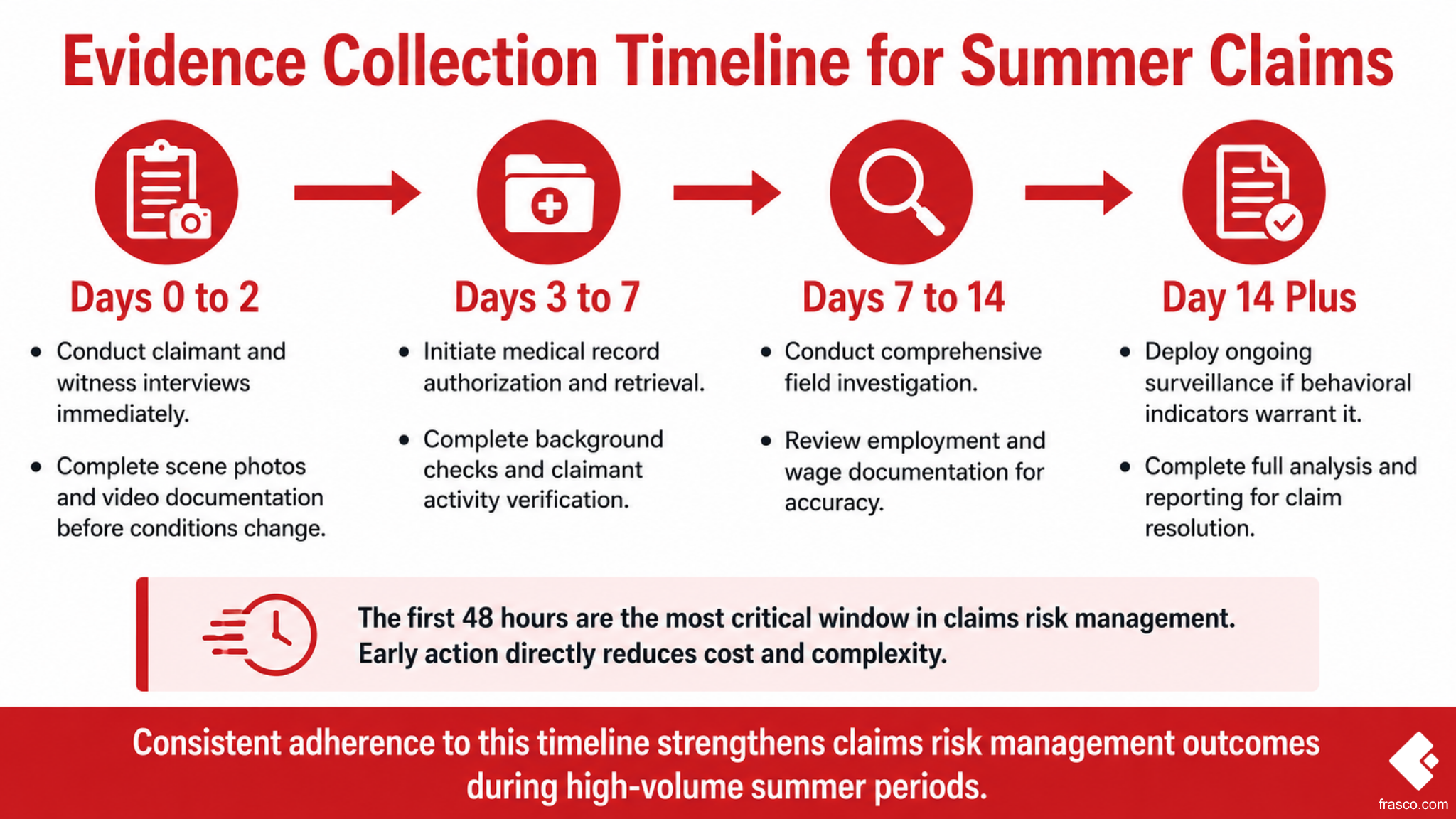
Accurate evidence collection is one of the most important factors in resolving claims efficiently and fairly. Delays caused by late interviews, lost digital trails, or missing scene documentation increase both costs and exposure for every claims risk management team.
Frasco Investigative Services applies early, structured, and unbiased investigative procedures to support carriers and self-insureds during the most demanding periods of the claims year. Five evidence collection priorities drive stronger claims risk management outcomes during summer 2026:
1. Timely Claimant and Witness Interviews
Immediate contact with claimants and witnesses preserves statement accuracy and reduces memory decay risk. Summer staffing shortages make outsourcing early investigative tasks especially valuable for maintaining claims risk management timelines when internal capacity is reduced.
2. Rapid Scene Documentation
Accident sites, property damage, and environmental conditions change quickly during summer months due to heat, traffic, and foot traffic. Rapid photo and video documentation reduces ambiguity and protects the claims risk management record before conditions shift.
3. Background and Activity Verification
Increased summer travel and seasonal employment changes raise the importance of verifying claimant activity levels, employment details, and pre-incident conditions. This verification protects against misrepresentation that inflates claims costs across all lines.
4. Medical and Employment Record Validation
Early record validation helps distinguish legitimate injuries from unrelated conditions or aggravated symptoms. In addition, validated records give claims risk management teams the accurate baseline they need to set appropriate reserves from the start.
5. Comprehensive Field Investigations
Experienced field investigators identify indicators of misrepresentation or fraud while capturing elements that desk-based assessments miss entirely. Moreover, field investigations provide the ground-level intelligence that strengthens every claims risk management decision from intake through resolution.
These five steps align with best practices from industry education sessions focused on developing evidence efficiently and applying targeted investigative techniques to improve outcomes during peak volume periods. (Source: theclm.org)
Strengthening Claims Risk Management Through Proactive Summer Risk Assessment
Risk assessment sets the foundation for managing seasonal claim surges. Claims risk management teams that assess exposure before summer peaks arrive consistently outperform those that respond reactively after volumes spike.
Industry benchmark data plays an essential role in helping risk managers anticipate exposure levels and allocate resources effectively. The RIMS Benchmark Survey provides data from more than 5,000 insurance programs and remains a leading source of market intelligence for claims risk management planning. (Source: rims.org)
Five practical risk assessment steps strengthen claims risk management ahead of summer 2026:
Step 1 — Review Historical Seasonal Claims Data
Use prior summer data to anticipate spikes in specific lines such as auto liability, workers compensation, general liability, and property-related incidents. Historical patterns give claims risk management teams the evidence they need to prioritize resources before peak season begins.
Step 2 — Identify Staffing Vulnerabilities Before They Create Gaps
Summer vacations create personnel gaps that delay claims risk management workflows at the worst possible moment. Address this with temporary staffing, cross-training plans, or pre-arranged investigative support from experienced partners before the season begins.
Step 3 — Incorporate Updated Risk Knowledge Into Planning
The RIMS resource library offers industry research, survey findings, and benchmarking that support evidence-based claims risk management planning. Specifically, updated knowledge of current cost trends and line-specific exposure patterns helps teams allocate resources where risk is highest.
(Source: rims.org)
Step 4 — Evaluate and Pre-Arrange Investigative Partnerships
Partnering with established investigative firms ensures consistent evidence collection even during high-volume periods. Frasco’s decades of expertise in multi-line claims investigations helps stabilize workloads and maintain claims risk management quality when internal capacity is most constrained.
Step 5 — Embed Operational Risk Controls Before Season Begins
Reports on managing claims operational risks confirm the value of strengthening internal protocols, investing in risk frameworks, and ensuring cross-department alignment before summer begins. Organizations that embed these controls early enter peak season with stronger claims risk management foundations.
A Summer-Ready Claims Risk Management Checklist for Claims Leaders
Use this checklist to confirm your organization enters the 2026 summer surge with strong investigative readiness, operational controls, and data alignment across every line of coverage.
Staffing and Resource Readiness
- Confirm vacation schedules and coverage plans across all claims risk management teams before summer begins
- Pre-assign investigative partners to handle overflow during peak volume periods in high-exposure regions
- Ensure access to qualified field resources across all geographic areas where claim volume is expected to rise
Evidence Collection Preparation
- Adopt strict 48-hour timelines for early evidence capture across all new summer claims
- Validate investigator availability across all lines before seasonal volume increases
- Standardize scene documentation procedures so every field team captures evidence consistently
Data and Risk Alignment
- Review relevant risk benchmarking data from RIMS surveys and reports to identify where exposure is highest
- Update internal risk models to reflect recent cost escalation trends across auto, liability, and workers compensation lines
- Identify claim categories most likely to surge based on prior summer data and current market conditions
Operational Controls
- Confirm escalation protocols for complex or high-exposure claims before volume peaks
- Audit files to ensure compliance with investigative standards and claims risk management documentation requirements
- Provide refresher training for adjusters on interview techniques, documentation standards, and early red flag identification
Build Your Claims Risk Management Foundation Before Summer 2026 Peaks
Summer 2026 poses real and growing challenges for insurers navigating seasonal claim spikes, rising costs, operational strain, and elevated claimant activity. Industry experts confirm that early and thorough evidence collection, paired with proactive risk assessment, significantly improves outcomes for every claims risk management team that prepares before the surge arrives.
With established investigative expertise and proven methodologies built across five decades of field experience, Frasco Investigative Services remains a trusted resource for organizations seeking clarity, efficiency, and accuracy during the high-volume summer period. The insurers that invest in claims risk management preparation now will enter summer 2026 with stronger controls, better data, and the investigative partnerships they need to manage seasonal exposure with confidence.
Contact Us Today
Frasco® Investigative Services delivers ethical and efficient solutions tailored to your needs. Have questions or want to discuss your investigative needs further? Contact one of our experienced experts today to find the answers you’re looking for.
Disclaimer: This blog post is for informational purposes only and should not be considered legal advice. Please consult your general counsel for specific legal guidance. Frasco investigators are licensed, and our operations comply with US industry, federal, state, and local laws.