
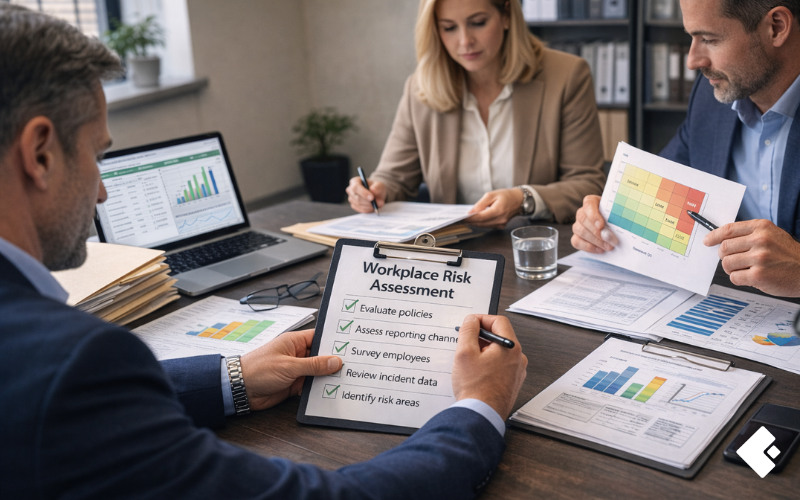
Across workplaces in the United States, leaders face a clear reality. Misconduct, compliance challenges, and employee concerns have not faded. Instead, they have grown more complex and costly. As organizations enter February 2026, a proactive Workplace Risk Assessment, paired with guided investigations, plays a critical role in protecting employee safety, legal compliance, and long-term resilience.
February presents a unique opportunity. This period follows post holiday workforce transitions and aligns with annual compliance planning and early year strategy reviews. As a result, many organizations revisit policies, launch compliance initiatives, and set priorities for the year ahead. This timing makes February ideal for strengthening Workplace Risk Assessment efforts before issues escalate.
This article reviews seasonal trends, key statistics, and practical frameworks that position proactive investigations and Workplace Risk Assessment practices as core elements of an effective workplace risk strategy.
Seasonal and Industry Trends Shaping Workplace Risk in Early 2026
Annual Compliance and Policy Review Cycles
At the start of the year, many organizations review HR policies, compliance frameworks, and employee relations processes. February often follows performance reviews and benefits enrollment, while it also precedes major training plans. During this period, HR and risk leaders commonly assess gaps found in year end audits, update reporting tools after regulatory changes, and review new operational risks tied to staffing shifts.
Aligning a Workplace Risk Assessment with these cycles helps ensure that risk management stays strategic rather than reactive.
Post Holiday Workforce Dynamics
After the holiday season, organizations often see renewed focus on morale, interpersonal conflict, and safety concerns. In addition, seasonal hiring patterns in retail, logistics, and hospitality can bring in new employees with limited onboarding. These factors increase the chance that unresolved issues surface early in the year. A proactive Workplace Risk Assessment helps address concerns before they grow into formal complaints.
An Evolving Workplace Risk Landscape
Workplace risk continues to change. Expanded reporting tools, including anonymous channels, increase visibility into employee concerns. At the same time, the scope of misconduct now covers a wider range of behaviors. Because of this shift, proactive Workplace Risk Assessment practices help organizations identify hidden risk areas before complaints become formal cases..
The State of Workplace Misconduct and Reporting
Harassment and Misconduct Trends
Recent studies show that nearly 24% of US employees report experiencing workplace harassment within the last five years. In addition, 46% report witnessing harassment involving colleagues. These figures highlight persistent challenges that HR and leadership teams must address through consistent Workplace Risk Assessment planning. (Source: Human Resources Director)
Underreporting and Trust Gaps
Fewer than half of employees who experience harassment report it to HR. Many cite fear of retaliation or lack of trust in internal processes. One study found that only 40% of employees exposed to harassment filed a formal complaint, with even fewer reporting issues directly to HR. This data underscores the importance of building trust through transparent investigation processes.
(Source: Human Resources Director)
Rising Claims and Legal Exposure
Workplace discrimination, harassment, and retaliation claims reached roughly 14.7 claims per 1,000 employees in 2024, marking the highest levels on record. This sustained increase reinforces the need for structured investigations and a consistent Workplace Risk Assessment framework. (Source: HR Acuity)
Why Proactive Workplace Risk Assessment Matters
As employers set priorities for 2026, reactive approaches to incidents are no longer sufficient. Proactive workplace investigations and risk assessments offer several practical benefits:
1. Early Identification of Systemic Issues
Proactive investigations allow organizations to detect patterns that could lead to complaints or litigation. By reviewing internal reports, HR metrics, and engagement data, leaders can identify risk areas early. A strong Workplace Risk Assessment supports early intervention and reduces long term exposure.

2. Data Driven Decision Support for Leadership
Investigative findings provide leaders with documented, evidence-based insights. Whether the issue involves discrimination, harassment, or policy violations, clear documentation helps leadership make confident decisions while reducing uncertainty.
3. Stronger Compliance and Defense in Legal Contexts
Organizations that follow structured investigative processes improve their position during audits, litigation, and regulatory reviews. A well documented Workplace Risk Assessment demonstrates commitment to compliance and workplace safety.
4. Enhancing Employee Trust and Engagement
When organizations conduct investigations impartially and communicate clearly, employees gain confidence that leadership takes concerns seriously. Over time, this strengthens engagement and supports healthier workplace culture.
Building a Proactive Workplace Risk Assessment Framework
1. Comprehensive Risk Assessments
A Workplace Risk Assessment should review policies, reporting channels, employee feedback, and potential vulnerabilities. Organizations should complete this review at least once a year, and more often in fast changing environments.

2. Clear and Accessible Reporting Channels
Employees need multiple ways to raise concerns, including anonymous options. Research shows that trust in reporting channels directly affects whether employees speak up. (Source: Human Resources Director)
3. Structured Investigation Processes
Organizations should define clear investigation timelines, roles, and documentation standards. This structure improves consistency across HR, legal, and leadership teams.
4. Training and Awareness
After completing a Workplace Risk Assessment, organizations should invest in targeted training. These sessions help leaders and employees understand conduct expectations and the value of timely reporting. Awareness efforts should remain active throughout the year.
5. Continuous Improvement
Organizations should feed investigation results back into policy updates and training plans. This feedback loop ensures that each Workplace Risk Assessment strengthens future risk management efforts.
Practical Next Steps for Employers in February 2026
As organizations close out year end reviews and plan ahead, February offers a timely moment to act:
-
Review prior year incident data to identify trends.
-
Commission a formal Workplace Risk Assessment focused on high risk areas.
-
Evaluate investigation outcomes and employee confidence measures.
-
Clarify escalation paths to reduce delays in response.
These steps help align workplace risk management with talent retention, compliance goals, and organizational stability.
Conclusion: Investing in Proactive Risk Management
In early 2026, workforce dynamics, legal exposure, and employee expectations underscore a clear imperative: employers must transition from reactive responses to proactive investigations and systematic risk assessments.
By grounding decisions in credible data, structured protocols, and thoughtful planning, organizations can not only mitigate risk but strengthen their operational foundations. Proactive investigations are not merely a compliance activity; they are a critical investment in organizational health, reputation, and competitive stability.
For HR leaders, risk professionals, and executives, embracing proactive workplace risk assessments now can prevent far greater costs later from escalating conduct issues to costly legal interventions.
Contact Us Today
Frasco® Workplace Investigations delivers ethical and efficient solutions tailored to your needs. If you have questions or want to discuss your investigative needs further? Schedule a call with one of our experts today to find the answers you’re looking for.
Disclaimer: This blog post is for informational purposes only and should not be considered legal advice. Please consult your general counsel for specific legal guidance. Frasco investigators are licensed, and our operations comply with US industry, federal, state, and local laws.