

Workplace harassment investigation has become one of the most critical capabilities HR leaders need heading into 2026. As the human resources landscape moves toward major regulatory updates, organizations face growing pressure to strengthen their compliance posture and reduce harassment and discrimination risks before new deadlines arrive. According to the Society for Human Resource Management, 2026 is emerging as a defining year for workplace regulations and shifting employee expectations, particularly in areas related to safety, inclusion, and conduct oversight. (Source: shrm.org)
Federal enforcement activity is rising sharply. The U.S. Equal Employment Opportunity Commission filed 143 discrimination or harassment lawsuits in fiscal year 2023, marking a more than 50 percent increase from the prior year. This trend signals higher government scrutiny and greater legal exposure for employers who fall behind in compliance preparation. (Source: shrm.org)
Organizations that plan ahead and take a structured, data-informed approach to harassment and discrimination prevention will protect employee wellbeing and avoid costly, reputation-damaging litigation. This guide covers what HR leaders need to know about workplace harassment investigation processes, compliance deadlines, and proactive strategies for 2026.
Understanding the 2026 Workplace Harassment and Compliance Landscape
The regulatory environment surrounding workplace harassment investigation and compliance is more complex in 2026 than it has been in recent years. HR leaders who understand what is changing can act early. (Source: shrm.org)
Recent SHRM forecasts show that HR leaders should expect new challenges across policies, training requirements, and documentation practices in 2026. Furthermore, broader workforce trends including the rise of AI governance, increased expectations for transparency, and expanded employee rights are reshaping the HR compliance agenda. (Source: shrm.org)
These shifts, combined with evolving state-level mandates such as required anti-harassment training cycles, demand that organizations implement repeatable systems to stay compliant year-round. Consequently, a reactive approach to workplace harassment investigation and compliance is no longer sufficient. HR teams need structured, proactive frameworks that address both prevention and response.
Key Risks Employers Face in 2026
Three specific risk areas are driving the urgency for HR leaders to strengthen their workplace harassment investigation capabilities before 2026 deadlines arrive.
1. Increased Litigation Exposure
- The EEOC is expected to maintain heightened enforcement through at least 2026, requiring HR departments to document policies, workplace harassment investigation outcomes, and corrective actions thoroughly.
- Organizations without consistent investigation processes face significantly higher legal exposure when claims escalate to litigation.
- Documented workplace harassment investigation records are among the strongest defenses available to employers facing EEOC scrutiny. (Source: shrm.org)
2. Rising Employee Expectations for Psychological Safety
- SHRM studies show growing concerns about workplace incivility and its direct impact on productivity and employee retention.
- These cultural factors consistently correlate with harassment risks that eventually require formal workplace harassment investigation responses.
- Organizations that address incivility early reduce the frequency and severity of claims that require investigation. (Source: shrm.org)
3. Complexity of State and Federal Compliance Changes
- SHRM’s 2026 compliance guidance confirms that employer responsibilities will expand across recordkeeping, training, and policy updates simultaneously.
- Multi-state employers face the additional challenge of navigating conflicting state and federal mandates within their workplace harassment investigation and documentation processes.
- Organizations that do not update their investigation frameworks risk non-compliance across multiple jurisdictions. (Source: shrm.org)
A Six-Step Checklist to Strengthen Workplace Harassment Investigation and Compliance in 2026
Use this practical checklist to ensure your organization enters 2026 with strong harassment investigation processes and compliance frameworks in place.
Step 1 – Update Employee Handbooks and Policies
SHRM guidance encourages integrating new legal requirements and ensuring policies reflect current state and federal mandates. (Source: shrm.org)
Recommended policy updates include:
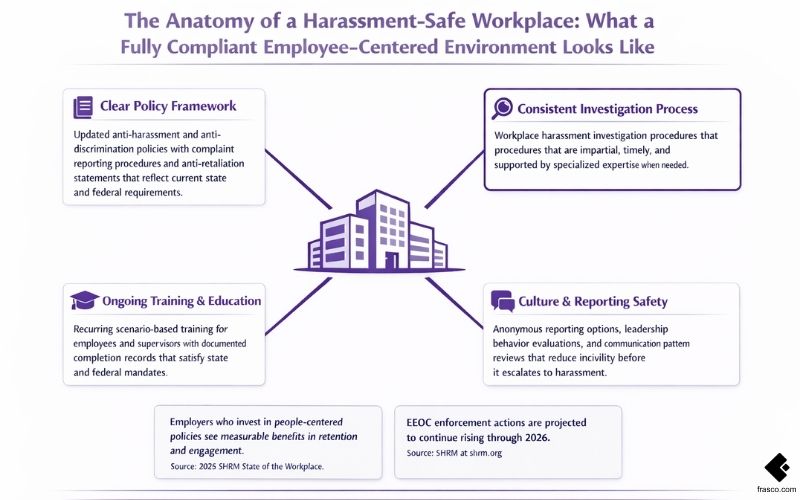
- Anti-harassment and anti-discrimination policies that reflect 2026 regulatory updates
- Complaint reporting procedures that give employees clear pathways to raise concerns
- Anti-retaliation statements that protect employees who report harassment
- Remote and hybrid conduct expectations that address digital communication environments
- Equal opportunity language that meets current EEOC standards
Step 2 – Conduct Recurring Anti-Harassment Training
Many states require annual or biennial training cycles and the EEOC’s heightened enforcement makes documented training programs essential. (Source: shrm.org)
Effective training programs include:
- Scenario-based modules that reflect real workplace situations
- Supervisor-specific guidance on recognizing and responding to harassment
- Behavioral expectations for digital and remote communication
- Documentation of employee participation and training completion
Step 3 – Strengthen Workplace Harassment Investigation Processes
This is the most critical step for organizations facing increased EEOC scrutiny in 2026. Effective workplace harassment investigation procedures must be:
- Consistent across all departments, locations, and levels of seniority
- Impartial and free from internal bias or conflicts of interest
- Timely in initiation, execution, and communication of outcomes
- Supported by specialized expertise when internal resources create bias risk or capacity constraints
Step 4 – Monitor HR Trends and Regulatory Updates
SHRM’s 2026 trend reports caution employers to stay current on evolving laws, employee rights, and compliance requirements. (Source: shrm.org)
HR leaders should monitor:
- State agency bulletins for new harassment training and investigation mandates
- EEOC updates on enforcement priorities and filing trends
- Workforce trend reports that signal emerging harassment and discrimination risk areas
- Organizational risk assessments that identify gaps in current investigation processes
Step 5 – Audit Documentation and Recordkeeping
SHRM’s year-end guidance emphasizes maintaining records that demonstrate compliance, training completion, and corrective action. (Source: shrm.org)
Documentation must include:
- Workplace harassment investigation records from initiation through resolution
- Policy acknowledgements signed by all employees
- Training completion records with dates and participation evidence
- Corrective actions taken in response to substantiated investigations
Step 6 – Evaluate Workplace Culture Risks
Research confirms that incivility contributes to problematic behaviors that escalate into harassment allegations requiring formal investigation. (Source: shrm.org)
Culture audits should include:
- Anonymous employee surveys that surface concerns before they escalate
- Leadership behavior evaluations that assess tone and conduct at all levels
- Review of communication patterns across teams and departments
- Assessment of employee comfort levels when reporting concerns
Why Proactive Workplace Harassment Investigation Protects Both Employees and Employers
The connection between proactive investigation practices and organizational wellbeing has never been stronger or more clearly supported by data.
As noted in the 2025 SHRM State of the Workplace findings, employers who invest in people-centered policies see measurable benefits in retention and engagement. (Source: shrm.org) A proactive workplace harassment investigation approach delivers three specific organizational benefits:
Protecting employees:
Employees who feel respected and safe are more likely to report concerns early. As a result, earlier reporting enables earlier intervention which reduces harm and prevents situations from escalating to formal complaints or litigation.
Protecting the organization:
With discrimination lawsuits rising more than 50 percent year over year, legal exposure grows dramatically for organizations without strong investigation programs. (Source: shrm.org) Moreover, a documented workplace harassment investigation process is one of the strongest defenses available when claims reach the EEOC or courts.
Strengthening leadership credibility:
Leaders who communicate clearly about conduct expectations and demonstrate consistent follow-through on workplace harassment investigation processes build healthier workplace relationships and reduce long-term legal risk.
Quarterly Action Plan: How HR Teams Can Prepare for Workplace Harassment Investigation and Compliance Deadlines
Use this quarterly framework to integrate workplace harassment investigation readiness into your annual HR planning cycle.
Quarter 1:
Update all employee handbooks and policies to reflect SHRM’s 2026 recommendations, current EEOC guidance, and applicable state mandates. Ensure anti-harassment policies include updated complaint reporting and anti-retaliation language. (Source: shrm.org)
Quarter 2:
Schedule mandatory anti-harassment training sessions. Ensure supervisors receive specialized education based on updated legal expectations and that all training is documented for compliance purposes. (Source: shrm.org)
Quarter 3:
Perform a culture and documentation audit. Engage third-party specialists to assess the impartiality and consistency of your workplace harassment investigation process and identify any documentation gaps before year-end review.
Quarter 4:
Conduct a comprehensive year-end compliance review. Verify that all workplace harassment investigation records, training completions, corrective actions, and policy acknowledgements are complete and properly maintained. (Source: shrm.org)
Why Workplace Harassment Investigation Expertise Matters More Than Ever in 2026
With tighter regulations and rising enforcement activity, HR leaders increasingly recognize that professional investigation support is not a luxury. It is a strategic necessity.
Organizations that rely on internal-only investigation processes face several risks that professional investigation partners help eliminate:
-
Lack of neutrality: Internal investigators may have relationships with parties involved in the claim, creating actual or perceived bias that undermines the investigation’s credibility.
-
Documentation gaps: Without structured investigation frameworks, documentation is often inconsistent and difficult to defend under EEOC or legal review.
-
Delayed resolution: Capacity constraints within HR teams lead to investigation delays that increase legal exposure and erode employee trust.
-
Retaliation risk: Employees who report harassment may face retaliation risks when investigations are managed entirely by internal staff with competing organizational loyalties.
Professional workplace harassment investigation support delivers four outcomes that protect organizations in 2026’s enforcement environment:
- Neutrality in sensitive matters that removes bias concerns from the process entirely
- Legally defensible documentation that holds up under EEOC review and litigation scrutiny
- Timely resolution of claims that reduces legal exposure and demonstrates good faith to regulators
- Reduced internal conflicts and bias risks that protect both the organization and the employees involved
Start Building Your Workplace Harassment Investigation Process Before 2026 Deadlines Arrive
The year 2026 demands that HR teams be more prepared, agile, and detail-oriented than in previous years. By strengthening workplace harassment investigation processes, maintaining proactive compliance frameworks, and engaging experienced investigation partners when needed, organizations can reduce harassment and discrimination risks while building safer, more respectful environments for every employee.
Staying ahead of compliance deadlines is not just a legal obligation. It is a commitment to the people who make organizations strong. The organizations that act now will be better positioned to protect their employees, defend their decisions, and demonstrate the kind of workplace culture that attracts and retains talent throughout 2026 and beyond.
Contact Us Today
Frasco® Workplace Investigations delivers ethical and efficient solutions tailored to your needs. If you have questions or want to discuss your investigative needs further? Schedule a call with one of our experts today to find the answers you’re looking for.
Disclaimer: This blog post is for informational purposes only and should not be considered legal advice. Please consult your general counsel for specific legal guidance. Frasco investigators are licensed, and our operations comply with US industry, federal, state, and local laws.