

Construction Claims Prevention: How to Build a Foundation of Safety Before Peak Season 2026
Construction claims prevention is one of the most cost-effective strategies risk managers, insurers, and claims professionals can act on right now. Construction remains one of the most hazardous private sector industries in the United States.
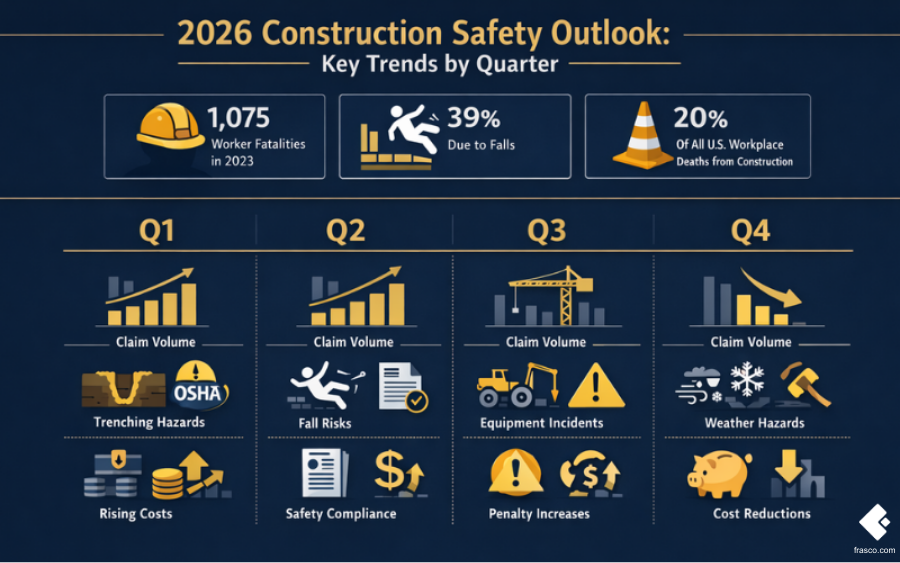
In 2023, the sector recorded more than 1,075 worker fatalities. This figure represents roughly one in five of all U.S. workplace deaths and falls alone caused nearly 39% of those deaths.
(Source: Construction Dive). Furthermore, as construction activity picks up entering spring and summer, claim exposure grows. These months are historically the peak period for incidents, and the window to act proactively is narrowing.
This post outlines key data, common pain points, and practical prevention strategies that help employers, insurers, and risk professionals reduce claims costs before they occur.
Why Construction Site Safety Risks Peak in Spring and Summer
Seasonal Activity Drives Higher Claim Exposure
- Spring through early fall signals increased jobsite activity across the U.S. Risk teams face greater exposure to hazards including elevated work, machinery movement, and ground traffic.
- Fatal falls, slips, and trips make up nearly 39% of all construction fatalities. These incidents occur most often during favorable weather when project schedules accelerate and deadline pressure mounts.
(Source: Construction Dive) - OSHA’s recent data confirm improvements in trench and fall fatality investigations. Yet these hazards remain widespread, reinforcing the need for focused construction claims prevention strategies early in the year before peak activity begins. (Source: OSHA)
Key Construction Site Safety Trends Shaping 2026
- Construction employers are increasingly adopting digital safety tools and training programs that measurably reduce serious injuries across jobsites. (Source: CoinLaw)
- Regulatory enforcement continues to strengthen. Annual OSHA penalty increases raise the stakes for compliance failures even further. (Source: Daily Reporter)
- As a result, organizations that invest in proactive safety practices now will avoid both the human and financial costs of reactive claims handling later.
The Biggest Pain Points Slowing Down Construction Claims Prevention
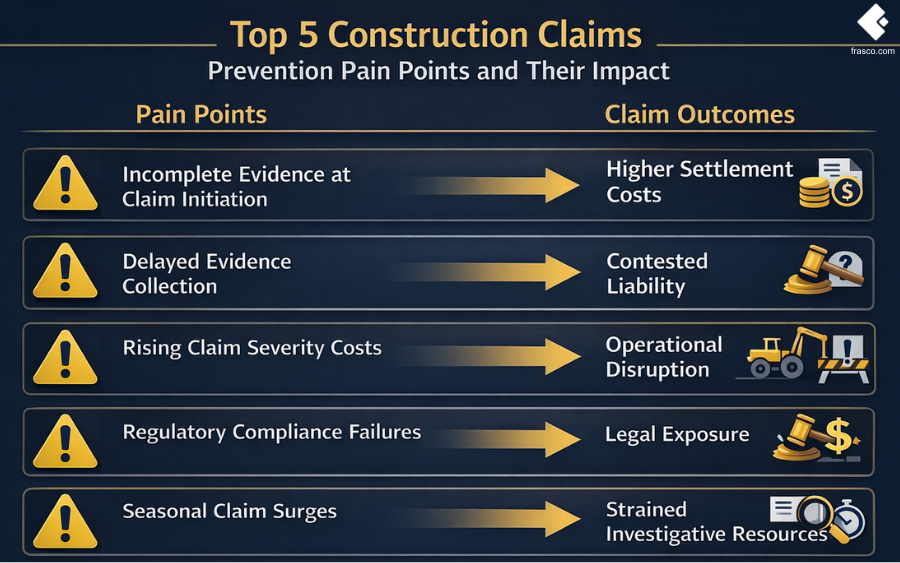
Risk and claims professionals in construction face several persistent challenges. These challenges make proactive prevention harder to execute. Understanding each pain point is the first step toward addressing them before peak season arrives
- Incomplete factual data at claim initiation: Complex, multi-party incidents make it difficult to establish clear liability from the start, creating gaps that increase investigation time and costs
- Delayed evidence collection: Waiting too long raises the risk of conflicting accounts and disputed liability, pushing settlement costs and legal defense time higher.
- Rising claim severity: Higher medical costs and longer recovery times push average indemnity costs upward. This trend affects insurers and employers across the industry. (Source: CoinLaw)
- Regulatory compliance gaps: Failing to document safety measures properly compounds financial and legal exposure significantly when incidents occur.
- Seasonal claim surges: Peak construction months stretch internal investigative resources at exactly the moment when demand is highest.
Why Construction Claims Prevention Delivers Measurable Business Value
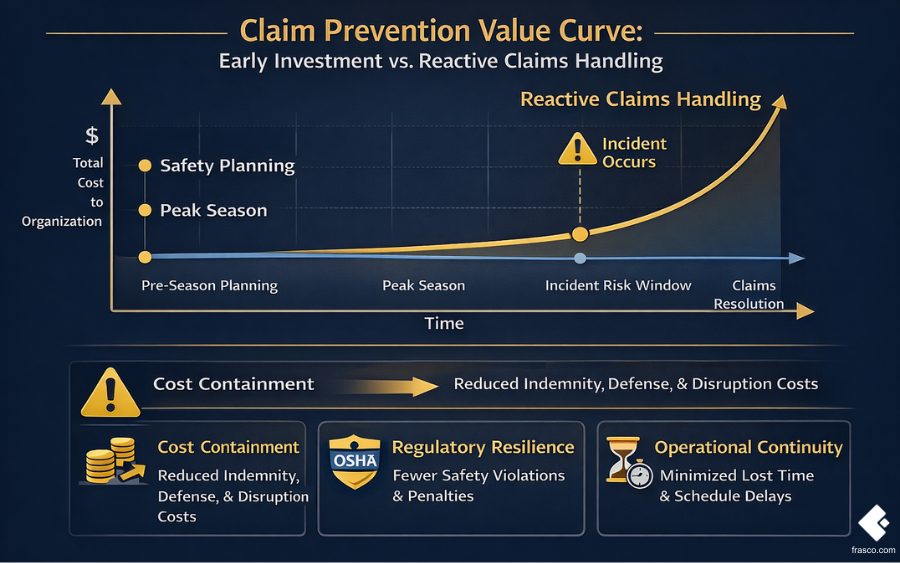
Effective construction claims prevention delivers clear returns across four key areas:
- Cost containment: Reducing claims before they occur cuts indemnity costs, legal defense expenses, and operational disruption costs. This makes it the most immediate and measurable benefit of early safety investment
- Regulatory resilience: Proactive safety practices reduce OSHA violations and penalties at a time when enforcement continues to intensify, protecting organizations from compounding financial and legal exposure. (Source: Daily Reporter)
- Operational continuity: Fewer serious injuries lead to less lost time and less schedule disruption, which protects project timelines and workforce productivity throughout the entire project lifecycle.
- Reputational risk management: Both insurers and policyholders benefit from a strong, demonstrated safety record that reduces reputational risk and strengthens stakeholder confidence over the long term.
March is the ideal time for risk professionals to act. Safety planning is being finalized ahead of peak periods. This window is the best opportunity to embed prevention strategies into insurance loss control programs and onsite supervision practices before claim frequency rises.
Construction Claims Prevention Strategies That Work in 2026
1. Use Data to Drive Site Risk Analysis
- Cost containment: Reducing claims before they occur directly lowers indemnity costs, legal defense expenses, and operational disruption costs, making it the most immediate and measurable benefit of early safety investment.
- Regulatory resilience: Proactive safety practices reduce OSHA violations and penalties at a time when enforcement continues to intensify, protecting organizations from compounding financial and legal exposure. (Source: Daily Reporter)
- Operational continuity: Fewer serious injuries lead to less lost time and less schedule disruption, which protects project timelines and workforce productivity throughout the entire project lifecycle.
- Reputational risk management: Both insurers and policyholders benefit from a strong, demonstrated safety record that reduces reputational risk and strengthens stakeholder confidence over the long term.
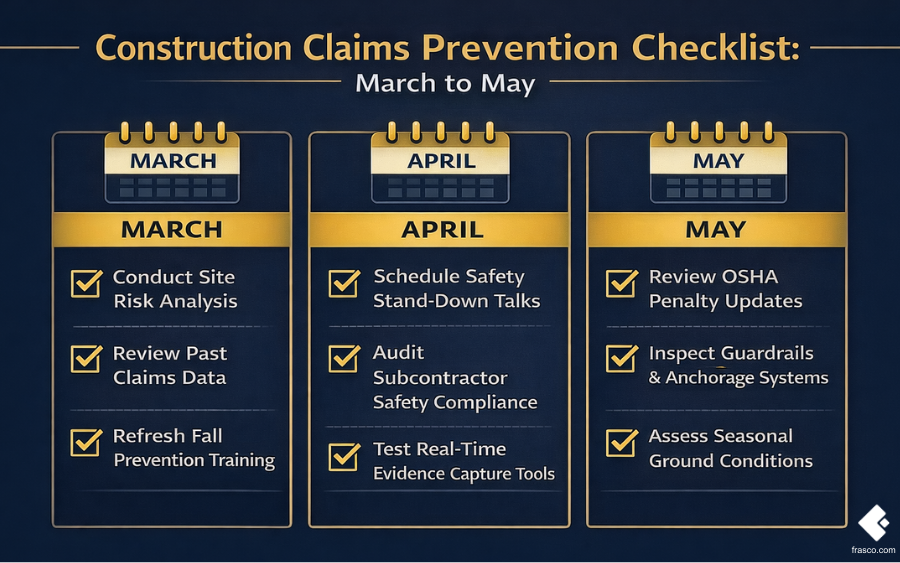
March is the ideal time for risk professionals to act. Teams are finalizing annual safety planning ahead of peak periods, making this the best window to embed prevention strategies into insurance loss control programs and onsite supervision practices before claim frequency rises.
2. Strengthen Fall Prevention Programs Before Outdoor Work Accelerates
- Falls remain the leading cause of construction fatalities. Treating fall prevention as a non-negotiable priority is essential. (Source: Construction Dive)
- Enhanced guardrails, reliable anchorage systems, and up-to-date worker training are all essential before spring projects ramp up and workforce exposure increases.
- Schedule regular stand-down safety talks focused on fall risks. These talks keep prevention top of mind across the entire workforce.
3. Plan for Seasonal Hazards Before They Arrive
- Address unstable ground conditions caused by spring thaw before they create slip, trip, and fall exposure on active sites.
- Manage increased subcontractor activity carefully. New workers may be unfamiliar with site-specific hazards and safety protocols.
- Plan for equipment mobilization ahead of time. Machinery hazards grow significantly during the early weeks of peak season.
- Tackling these seasonal conditions during pre-season planning rather than responding to them after an incident is the foundation of effective construction claims prevention.
4. Capture Evidence in Real Time to Protect Claims Outcomes
- Invest in tools and processes that document site conditions, witness accounts, and safety compliance in real time before issues escalate into formal claims.
- Timely documentation supports accurate claims assessment. It also reinforces prevention by identifying hazard patterns before injuries occur.
- Strong real-time documentation practices reduce the risk of disputed liability and lower settlement costs when construction claims do arise.
- This step is one of the highest-value actions a risk team can take to protect both people and claims outcomes throughout peak season.
Conclusion
Building safety fundamentals before claims occur is not a theoretical goal. It is a measurable, cost-effective business requirement. Construction continues to account for a disproportionate share of workplace fatalities and serious injuries. As a result, strategies that prioritize early risk identification, real-time evidence capture, and regulatory compliance are essential for every organization operating in this sector.
For claims professionals and construction risk managers, investing in construction claims prevention now will reduce costly investigations later. It will also build resilience in an evolving regulatory and operational environment.
Contact Us Today
Frasco® Investigative Services delivers ethical and efficient solutions tailored to your needs. Have questions or want to discuss your investigative needs further? Contact one of our experienced experts today to find the answers you’re looking for.
Disclaimer: This blog post is for informational purposes only and should not be considered legal advice. Please consult your general counsel for specific legal guidance. Frasco investigators are licensed, and our operations comply with US industry, federal, state, and local laws.