
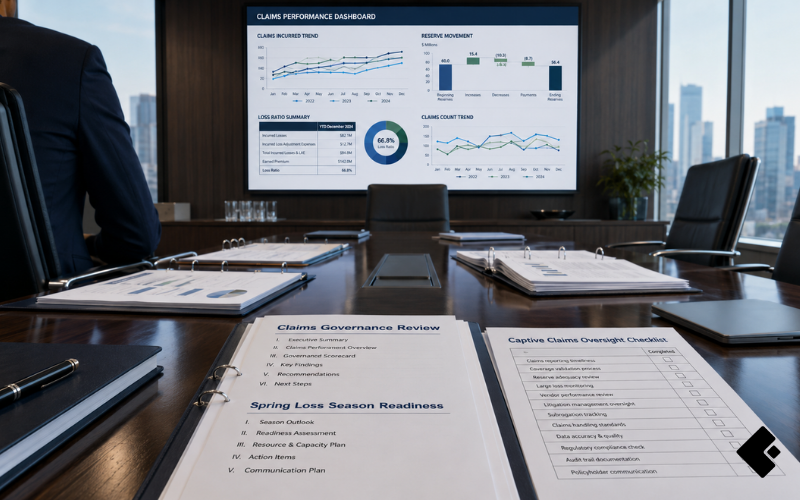
Spring is a natural reset point for every captive insurance program. Budgets are finalized, annual meetings are underway, and claims data from the prior year is finally complete. For captive owners and managers, this season is a strategic opportunity to reassess claims strategy before higher-frequency loss periods arrive later in the year.
The global captive insurance industry continues to expand, surpassing 10,000 active risk-bearing entities worldwide and writing an estimated 62 billion dollars in direct premiums annually. As captive utilization grows, scrutiny around claims governance, reserve accuracy, and data quality is growing with it. Smarter claims strategies are no longer optional for a well-run captive insurance program. They are foundational to program sustainability and long-term capital protection. (Source: captive.com)
This guide outlines practical, data-supported approaches captive programs can use in 2026 to strengthen claims oversight, reduce volatility, and protect capital before peak loss season arrives.
Why Claims Strategy Matters More for Every Captive Insurance Program in 2026
Captives consistently outperform traditional insurance structures due in part to strong claims alignment with parent company objectives. Industry analysis shows captives maintain an average five-year combined ratio of 83 percent, significantly outperforming commercial counterparts.
(Source: captives.insure)
However, as captive insurance programs expand into additional lines of coverage and higher retentions, small inefficiencies in claims handling compound quickly. Furthermore, programs that do not address these inefficiencies during spring planning cycles face avoidable volatility when loss frequency increases later in the year.
Spring planning cycles are increasingly used by captive insurance program leaders to evaluate:
- Prior year claim severity trends that signal emerging exposure areas
- Documentation quality and defensibility across closed and open files
- Timeliness of fact development from incident through resolution
- Gaps in independent verification that may affect reserve accuracy
These areas directly influence reserve confidence and board credibility throughout the year. Consequently, organizations that address them in spring are better positioned to manage the full loss cycle with accuracy and transparency.
Three Claims Trends Shaping Captive Insurance Programs This Spring
Recent industry reporting highlights three specific claims-related trends that captive insurance program leaders need to address heading into mid-2026.
1. Captives Are Retaining More Risk by Design
The average captive loss ratio now sits near 60 percent, with nearly 40 percent of captives reporting loss ratios under 55 percent. This reflects tighter loss control but also higher exposure when individual claims escalate beyond expectations. As a result, the accuracy and completeness of claims documentation becomes more financially consequential at every retention level. (Source: worldmetrics.org)
2. Claims Complexity Continues to Increase
Multi-party incidents, longer claim durations, and higher documentation requirements are placing growing pressure on internal captive insurance program teams. Captive owners are responding by prioritizing earlier fact development and structured oversight rather than downstream correction. Moreover, programs that address complexity early consistently experience fewer late-stage disputes and more predictable reserve outcomes.
3. Governance Expectations Are Rising Across the Industry
Over 70 percent of captives now maintain formal risk or claims committees, many reporting directly to boards or finance leadership. This shift increases demand for consistent, defensible claim files that stand up to audit and regulatory review. In addition, captive insurance program leaders are under growing pressure to deliver clear, trend-based claims reporting that gives boards confidence in underlying data quality.
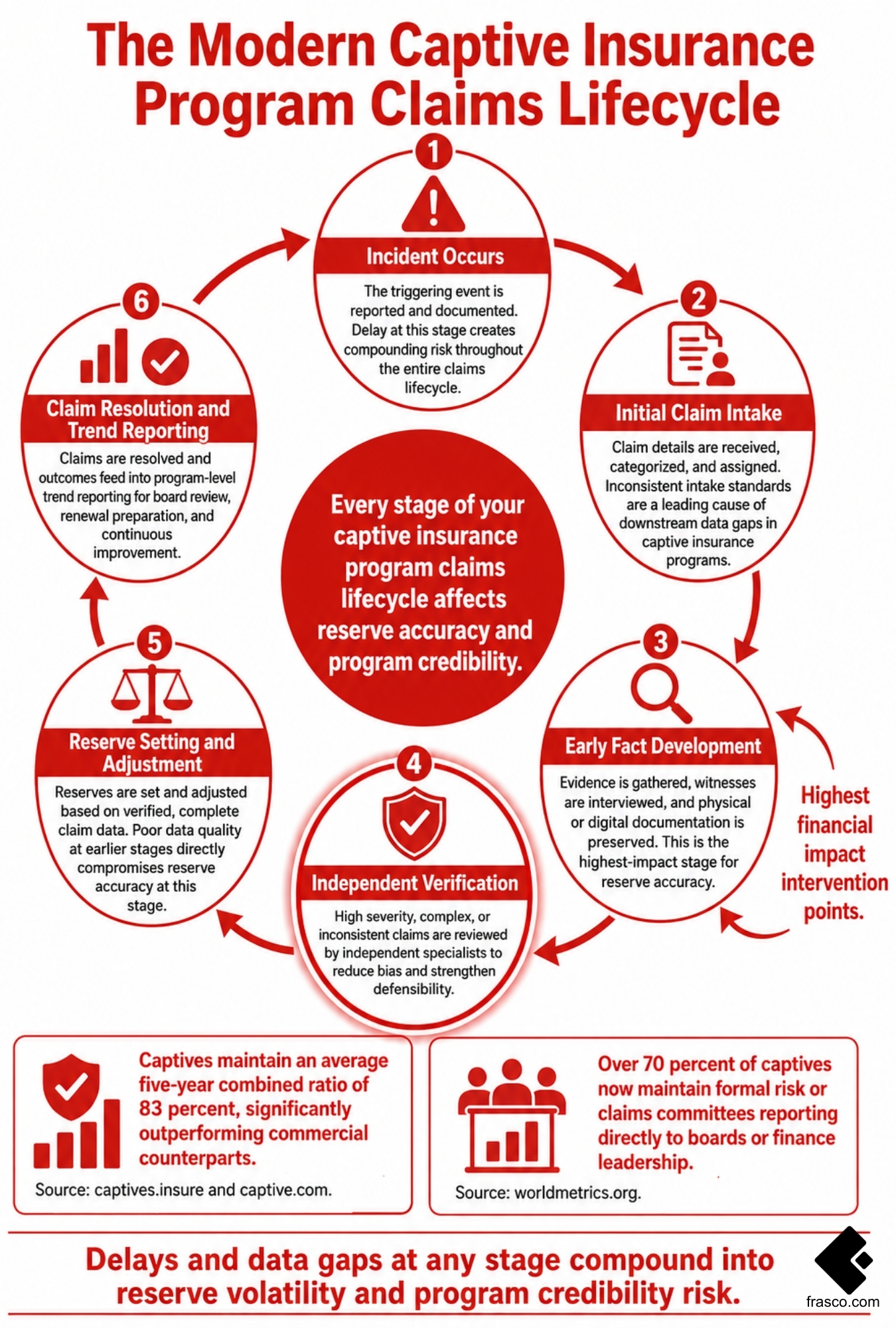
A Spring Checklist for Smarter Captive Insurance Program Claims Oversight
Use this three-step checklist to ensure your captive insurance program enters peak loss season with strong claims processes, accurate reserves, and defensible documentation.
Step 1 — Review Claims Data Before Peak Loss Periods
Spring is the best time to conduct a structured claims review using prior year data. Specifically, captive insurance program leaders should focus their review on:
- Average time from incident to documentation completion across all claim types
- Frequency of reserve adjustments and the data gaps that triggered them
- Claims reopened after closure and the verification failures that caused them
- Missing or inconsistent supporting evidence in closed files
Industry benchmarking shows captives filing financial statements within 90 days of year-end in over 90 percent of cases, reinforcing the importance of timely and accurate data inputs at every stage of the claims lifecycle. (Source: worldmetrics.org) Programs that identify data quality issues during spring review can address them before they affect mid-year reserve positions.
Step 2 — Strengthen Early Fact Development
Claims outcomes are largely determined early in the lifecycle. Captive insurance program leaders who prioritize timely fact development experience fewer late-stage disputes and more predictable reserve outcomes throughout the year. Early fact development steps include:
- Establishing clear documentation standards that apply consistently across all claim types and facilities
- Securing independent statements when appropriate, particularly for high-severity or multi-party incidents
- Preserving physical or digital evidence promptly before conditions change or witnesses become unavailable
This approach supports defensible decision-making and improves confidence at renewal and audit checkpoints. Furthermore, programs with strong early fact development records demonstrate the kind of claims discipline that boards and regulators increasingly expect from a well-governed captive insurance program.
Step 3 — Use Independent Verification Strategically
Independent verification is increasingly used by captive insurance programs to supplement internal resources and reduce bias risk. This is not about volume. It is about selectivity. High-severity, complex, or inconsistent claims benefit most from independent review.
Programs that integrate independent verification early in the claims lifecycle consistently experience:
- Improved data quality that supports more accurate reserve setting
- Reduced downstream friction between claims teams, boards, and regulators
- Stronger defensibility when claims are challenged during audit or litigation
- No increase in overall claim handling time when verification is deployed selectively
Governance and Reporting Expectations Are Rising for Captive Insurance Programs
Captive boards and regulators increasingly expect clear, trend-based insight into claims performance. Spring is the right time to align reporting formats and metrics ahead of mid-year reviews.
Industry data shows 80 percent of captives maintain reserves above regulatory minimums, reinforcing the importance of confidence in the underlying claim data that drives those reserve calculations.
(Source: worldmetrics.org) However reserve strength alone is not sufficient. Boards and regulators want to understand the quality and consistency of the data behind the numbers.
Effective captive insurance program claims reporting in 2026 emphasizes:
- Trend analysis over isolated outcomes that give boards a complete picture of program performance
- Clear explanations for reserve movement that connect data changes to specific claim developments
- Consistent file documentation standards that hold up under audit and regulatory scrutiny
- Objective support for claim decisions that demonstrates governance discipline to all stakeholders
Why Technology Alone Cannot Protect Your Captive Insurance Program
Analytics and reporting tools continue to improve across the captive industry. However, industry research consistently confirms that data quality drives insight quality. Technology cannot compensate for incomplete fact development.
Claims data that lacks timely verification or consistent documentation limits the value of every downstream analysis tool a captive insurance program uses. The output is only as reliable as the inputs that feed it.
High-performing captive insurance programs use technology to support three specific outcomes:
- Pattern identification across claim types, facilities, and loss periods that reveals emerging exposure trends
- Trend visibility that gives boards and risk committees the forward-looking intelligence they need for confident decisions
- Reporting consistency that ensures every stakeholder receives the same accurate, complete view of program performance
They do not rely on technology to compensate for incomplete fact development, unclear processes, or inconsistent documentation standards. Those foundations must be built before technology can deliver its full value to the captive insurance program.
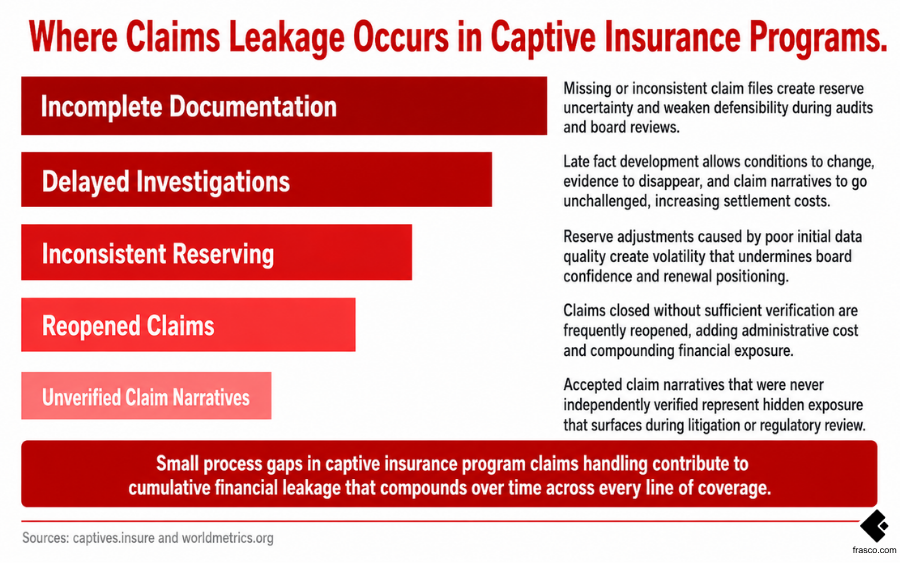
Practical Takeaways for Captive Insurance Program Leaders Heading Into Peak Loss Season
As captive utilization continues to expand in 2026, smarter claims strategies focus less on volume and more on structure, timing, and governance. The programs that outperform are the ones that act before peak season arrives.
Captive insurance program leaders entering spring planning cycles should prioritize four specific actions:
- Early lifecycle intervention that catches claims complexity before it compounds into reserve volatility
- Selective independent verification deployed on high-severity and inconsistent claims where bias risk is highest
- Consistent documentation standards applied across all claim types, facilities, and lines of coverage
- Board-ready reporting formats that deliver trend-based insight with clear explanations for every reserve movement
These four actions protect reserves, improve predictability, and strengthen captive insurance program credibility across every stakeholder audience from boards and regulators to reinsurers and renewal partners.
Want to Learn More?
At Frasco, we believe knowledge plays a critical role in captive insurance program management. We provide resources designed to help captive owners and managers strengthen claims oversight, protect capital, and maintain governance confidence throughout the year.
📄 Download our white paper:
Quality Investigations: The 4 Fundamentals to Protecting Insurance Captive Programs
Stay Updated: Get real-time insights, the latest blogs, and updates on upcoming industry events.
👉 Follow Frasco on LinkedIn
Contact Us Today
Frasco® Investigative Services delivers ethical and efficient solutions tailored to your needs. Have questions or want to discuss your investigative needs further? Contact one of our experienced experts today to find the answers you’re looking for.
Disclaimer: This blog post is for informational purposes only and should not be considered legal advice. Please consult your general counsel for specific legal guidance. Frasco investigators are licensed, and our operations comply with US industry, federal, state, and local laws.