

As 2026 begins, delivery networks and claims teams are working in an environment shaped by growing parcel volume, rising cargo theft and damage, and higher customer expectations. Instead of only trying to reduce claim counts, many carriers, insurers, and risk managers now focus on one priority: investigating delivery claims thoroughly and accurately. Strong investigations support fair outcomes, improve operations, and reduce long term risk.
This guide reviews key industry and seasonal trends, explains the challenges claims teams face, and shares strategies for stronger, better investigated Delivery Claims in early 2026.
Industry Trends Impacting Delivery Claims in 2026
1. Parcel Volume Growth Creates More Complex Delivery Claims
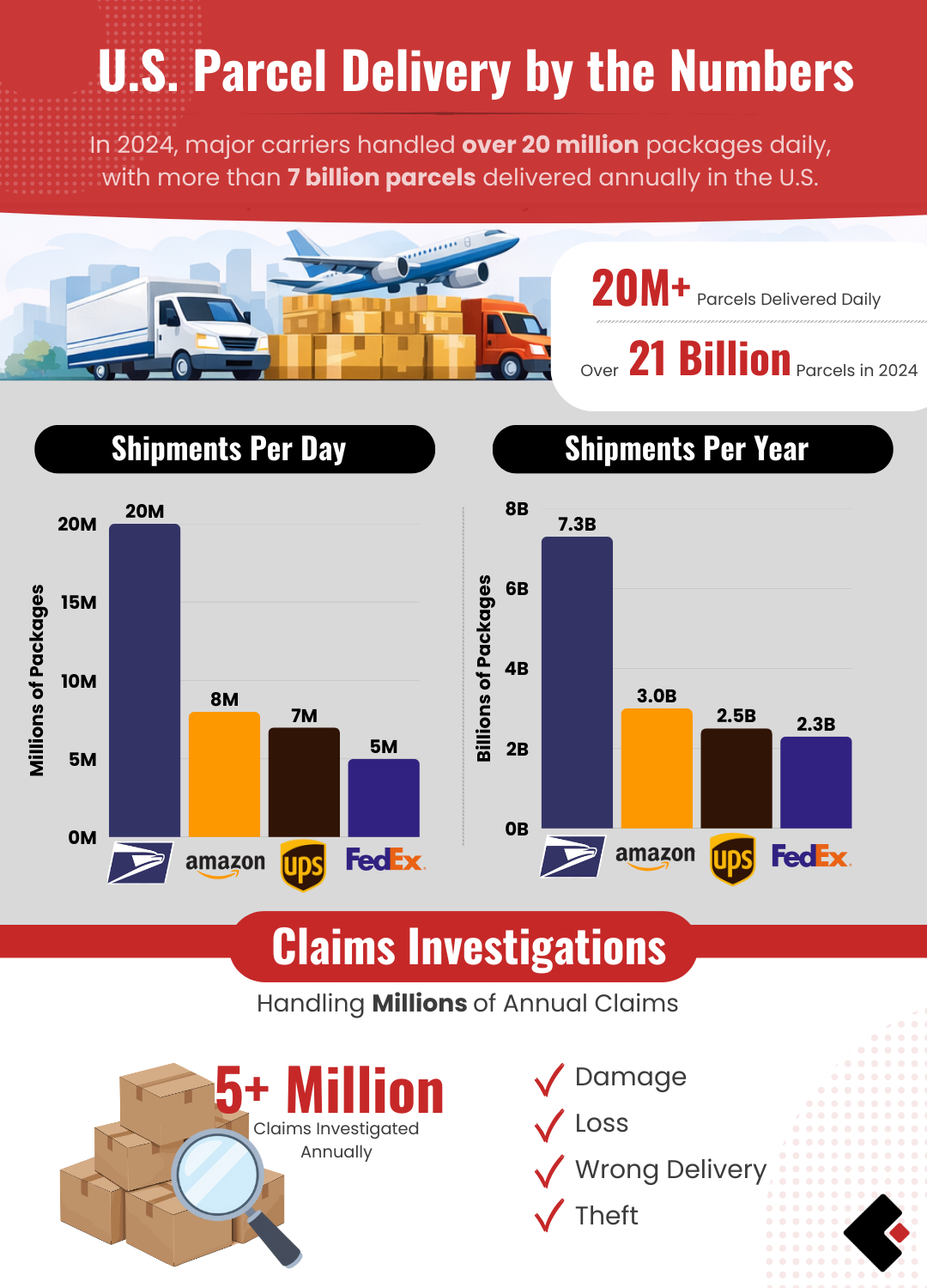
The US parcel delivery market remains extremely active. In 2024, major carriers such as the US Postal Service, Amazon Logistics, UPS, and FedEx handled most US parcel volume, with more than 20 million packages delivered daily by USPS alone. Projections show parcel volume could keep rising through 2026 as e-commerce demand stays strong. (Source: Capital One Shopping)
As volume rises, delivery problems also rise, including damage, loss, wrong delivery, and theft. These issues do not always point to negligence or false reporting. However, they do require careful investigation to confirm responsibility and support accurate outcomes for Delivery Claims.
2. Commodity Theft and Cargo Security Increase Delivery Claims Risk
Cargo theft continues to affect supply chains and claim complexity. The National Insurance Crime Bureau reports cargo theft losses rose sharply in 2024 and should continue rising in 2025
(Source: National Insurance Crime Bureau). This trend includes physical theft and more advanced tactics such as false pickups and identity misuse, which can complicate claim review.
Because these events can look like normal delivery problems, claims professionals need solid evidence to separate valid losses from criminal activity and possible inaccurate reporting. As a result, stronger investigations help teams handle Delivery Claims with more confidence.
3. Damage Rates and Customer Expectations Put Pressure on Delivery Claims
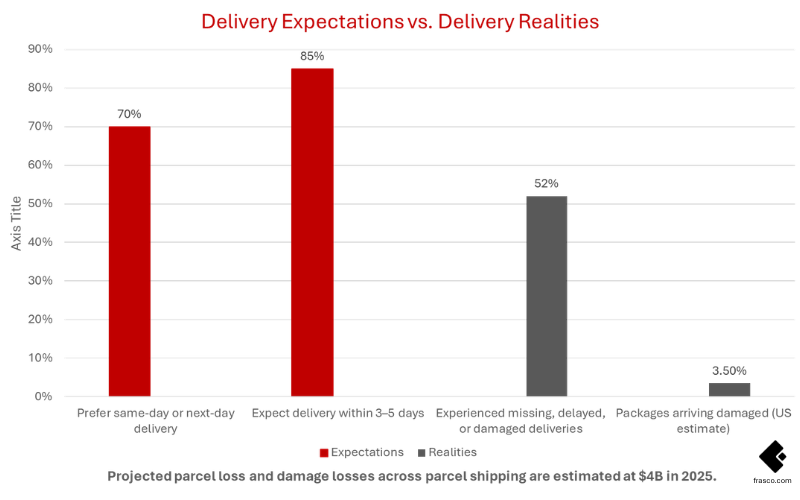
Industry data shows many packages arrive damaged or compromised in transit. In 2024, about 34 percent of US packages were estimated to arrive with some form of damage, and loss and damage costs across parcel shipping were projected at 4 billion dollars in 2025 (Source: Opensend).
At the same time, consumer surveys show higher expectations for fast, accurate deliveries, with most customers preferring same day or next day delivery options (Source: ZipDo). These expectations increase pressure on carriers and insurers to investigate delivery failures with more care. Therefore, well documented Delivery Claims help protect trust and support fair outcomes.
4. Seasonal Peaks Extend Into Early Q1
Peak delivery seasons in late Q4 often stretch into early Q1. This creates continued strain and seasonal increases in damage reports, wrong deliveries, and customer complaints. Because claims from late year shipments can still require resolution in early 2026, accurate investigation matters even more for Delivery Claims during this time.
Top Challenges Facing Claims and Risk Professionals
Delivery claim investigations are more complex than ever due to several key issues.
Incomplete or Conflicting Incident Data
Many Delivery Claims start with limited or conflicting information from customers, carriers, or shippers. Without thorough investigation, claims teams may decide liability with missing details, which can lead to inaccurate outcomes.
High Volume and Tight Deadlines
With millions of packages moving each day, claims professionals often feel pressure to close claims fast. Speed matters, but teams should still protect investigation quality. When teams rush, they risk errors that can create disputes and higher costs later.
Sophisticated Theft and Loss Scenarios
Modern cargo theft and delivery system misuse can look like normal delivery loss. Therefore, careful investigation helps teams identify patterns, confirm facts, and support appropriate results for Delivery Claims.
Technical and Logistics Complexity
Vehicle data, tracking history, GPS, last mile delivery details, and multiple party logistics can add complexity. Because teams must interpret this information correctly, specialized investigative support often helps claims teams rebuild what happened.
Why Better Investigated Delivery Claims Matter
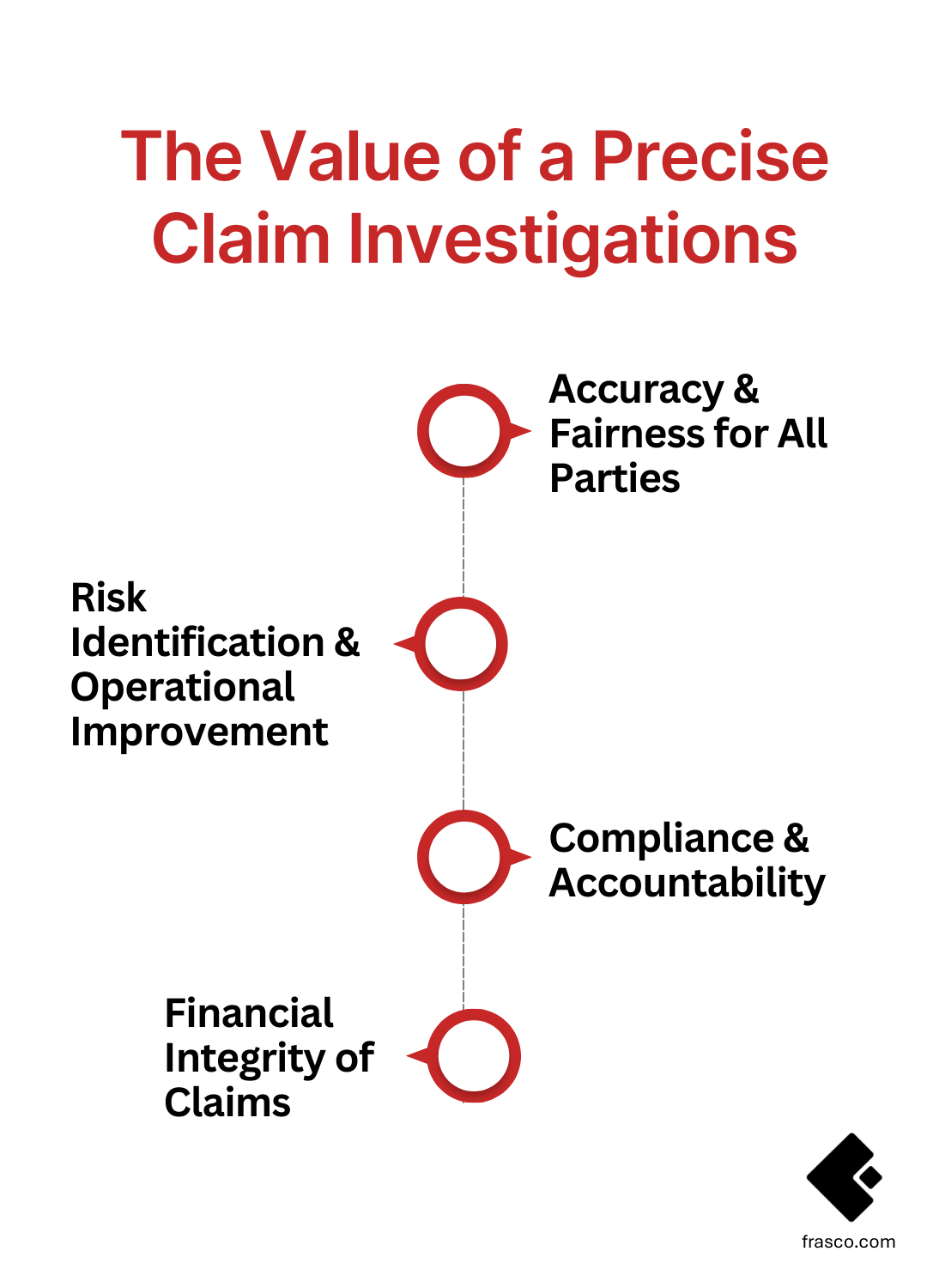
1. Accuracy and Fairness for All Parties
Thorough investigations help teams base liability and coverage decisions on complete and reliable information. This supports fair treatment for carriers, insurers, and customers, and it improves consistency across Delivery Claims.
2. Risk Identification and Operational Improvement
Investigation findings, including sequence of events, route behavior, and handling practices, can reveal repeat issues. Then, carriers and shippers can improve operations to reduce future problems and improve outcomes for Delivery Claims.
3. Compliance and Accountability in Dispute Scenarios
Detailed documentation supports compliance expectations and provides strong evidence for disputes or litigation. As a result, well documented Delivery Claims reduce uncertainty and support defensible decisions.
4. Financial Integrity of Claims Outcomes
Precise investigations help carriers and insurers avoid unnecessary payouts while still honoring valid claims. This also helps teams close Delivery Claims with better speed and accuracy.
Strategies for Better Investigated Delivery Claims
Use Data and Tracking Intelligence Effectively
Vehicle data, scan history, GPS, and time stamped delivery records provide useful context. When teams use the digital trail correctly, they rebuild events more accurately and improve outcomes for Delivery Claims.
Standardize Early Reporting Protocols
Consistent incident reporting from drivers, customers, and partners helps investigators collect reliable early details. As a result, teams reduce missing information and strengthen the foundation for Delivery Claims.
Engage Specialized Investigative Support Early
Instead of waiting for a dispute to grow, bringing investigative specialists in early helps preserve evidence and speeds up accurate resolution. This approach supports better decisions across Delivery Claims.
Integrate Investigation Findings With Operational Learning
When teams link investigation results back to operations and risk programs, they reduce repeat problems and improve performance over time. Therefore, Delivery Claims can drive both fair outcomes and practical improvements.
Conclusion
In 2026, strong delivery claim management does not focus on receiving fewer claims. It focuses on ensuring teams investigate each claim thoroughly and accurately. With parcel volume rising, cargo theft and damage growing more advanced, and customer expectations increasing, claims professionals and risk managers need consistent investigation practices that support fair outcomes, operational learning, and financial integrity.
When organizations prioritize better investigated Delivery Claims, they build trust with customers, support sound decisions, and move forward with more clarity in a complex delivery environment.
Contact Us Today
Frasco® Investigative Services delivers ethical and efficient solutions tailored to your needs. Have questions or want to discuss your investigative needs further? Contact one of our experienced experts today to find the answers you’re looking for.
Disclaimer: This blog post is for informational purposes only and should not be considered legal advice. Please consult your general counsel for specific legal guidance. Frasco investigators are licensed, and our operations comply with US industry, federal, state, and local laws.